Building a new home is one of the biggest projects you’ll ever take on. It’s exciting to choose the layout, finishes, and features that will shape how you live for years to come. But once construction is complete, even small oversights such as not having enough outlets, storage, lighting, or charging points can become daily frustrations.
In 2026, homeowners are thinking beyond aesthetics and looking for ways to make new homes more comfortable, efficient, connected, and adaptable. Dedicated workspaces, better storage, smart-home technology, energy-efficient systems, EV-ready electrical infrastructure, improved lighting, and flexible rooms are becoming important considerations during the planning stage. The best time to incorporate these features is before construction begins, when changes are easier and typically less disruptive.
At Builders Group Construction, our team brings 75+ years of combined experience to custom builds and home addition projects in Dayton. We understand how much goes into planning a new home and help Ohio homeowners think through the practical details that can make a major difference after move-in.
This guide covers 60+ things to consider when building a house, from easily overlooked essentials to comfort, technology, efficiency, storage, and luxury upgrades. Whether you are building your first home or creating a custom space for your family, these ideas can help you plan ahead and avoid the “I wish we had added that” moments later.
Essential Features Most People Forget to Include
Let’s start with the stuff that seems obvious, until you forget it. These are the features that cost almost nothing during construction but become expensive headaches to add later.
Smart Outlet Placement
Outlets are easy to overlook. You’ll regret it every time you need to charge your phone or plug in a lamp.
Here’s where most people wish they’d added more:
- Kitchen island – You need at least two outlets here for small appliances and charging
- Bedside – Put 4-plug outlets on both sides of where your bed will go
- Inside closets – Great for charging vacuums, phones, or running a small dehumidifier
- Under eaves outside – Makes holiday lights simple; add an indoor switch to control them
- Garage – Include at least one 20-amp circuit for power tools
- Pantry and inside cabinets – Perfect for charging stations or small appliances
- Recessed outlets behind TV and bed – Lets furniture sit flush against the wall
One smart move: install USB outlets in bedrooms and kitchens. You’ll never hunt for a charging block again.
Motion-Activated Lighting
Walking into a dark pantry with arms full of groceries is no fun. Motion-sensor lights fix this problem for about $30 per fixture.
Add them to your:
- Pantry
- Walk-in closets
- Stairways
- Mudroom
- Garage entry
The lights turn on when you walk in and shut off automatically. No switches to fumble with. No wasted energy.
Kitchen Cabinet Lighting
Good kitchen lighting makes cooking easier and safer. Most builders install basic overhead lights, but that’s not enough.
Consider three types:
Under-cabinet lighting lights up your countertops where you actually work. LED strips work great and use very little power.
Above-cabinet lighting adds warmth and shows off decorative items. It also makes your kitchen feel bigger at night.
Toe-kick lighting runs along the base of your cabinets. It creates a soft glow that’s perfect for late-night snacks without blinding yourself.
Recessed Bathroom Storage
Standard medicine cabinets stick out from the wall. But when you build new, you can recess storage right into the space between wall studs.
A recessed medicine cabinet sits flush with your wall. It looks cleaner and gives you the same storage without taking up space.
Don’t forget shower niches either. These built-in shelves hold shampoo, soap, and razors without ugly corner caddies. Most builders can add two or three niches for minimal extra cost during construction.
Luxury Features That Make Life Easier
Now let’s talk about the upgrades that feel like a splurge but pay off every single day.
Heated Bathroom Floors
Stepping onto cold tile at 6 AM is rough, especially during Ohio winters. Radiant floor heating changes everything.
Electric heating mats install under your tile and warm the floor to a comfortable temperature. Most systems cost $10 to $15 per square foot to install. For a typical bathroom, you’re looking at $500 to $800 total.
The daily comfort is worth every penny. Your feet stay warm, the bathroom dries faster after showers, and your heating bill barely notices the difference.
Radiant Floor Heating for Whole Rooms
You can extend radiant heating beyond the bathroom. Many homeowners add it to basements, kitchens, and entryways.
Hydronic systems (which use hot water tubes) work best for large areas. They’re more expensive upfront but cost less to run than electric mats. This is especially smart for basement remodels where concrete floors tend to stay cold.
Heated Driveway
Here’s an Ohio-specific upgrade that makes winter bearable. Heated driveways melt snow and ice automatically, no shoveling, no salt, no slip hazards.
The system embeds heating cables or tubes under your driveway surface. When temperatures drop and moisture hits, the system activates. You wake up to a clear driveway while your neighbors are still scraping ice.
Yes, it’s a bigger investment. But for steep driveways or homes where mobility is a concern, it’s a game-changer. Ohio weather is unpredictable you can check current conditions and forecasts to see just how much snow we deal with each year.
Jetted Laundry Sink
A deep utility sink in your laundry room is standard. But adding jets takes it to another level.
Jetted sinks agitate water to help clean delicate items, muddy sports gear, or anything you don’t want in your washing machine. They’re also great for soaking stained clothes before washing.
Dual Kitchen Workspaces
If you love to cook or if multiple people use your kitchen at once, consider dual workspaces.
This usually means two islands or one island plus a separate prep area. Each space gets its own sink and garbage disposal. One person can prep vegetables while another handles dirty dishes, and nobody gets in anyone’s way.
This setup works especially well with open floor plans. Your kitchen remodel becomes the heart of your home for both cooking and entertaining.
Hidden Rooms and Hidden Pantry Doors
Want something fun? A hidden door that looks like a bookshelf or wall panel.
Hidden pantry doors are especially popular. From the outside, it looks like regular cabinetry or a wall of shelves. Push or pull, and it swings open to reveal your pantry. Kids love it. Guests are always impressed.
Hidden rooms can serve as home offices, safe rooms, or extra storage that stays out of sight.
Stargazing Skylights
Put a skylight directly above your bed. On clear nights, you can watch the stars without leaving your pillow.
Modern skylights include shades for when you want to sleep in. Some even open for ventilation. Ohio gets plenty of clear nights to enjoy them.
Sun Tunnels
Not every room can have a window. Powder rooms, closets, and interior hallways often feel dark and cramped.
Sun tunnels (also called tubular skylights) solve this problem. They’re reflective tubes that run from your roof to your ceiling, bouncing natural light into spaces that would otherwise need artificial light all day.
They’re smaller and cheaper than traditional skylights, and they work in spaces where a full skylight wouldn’t fit.
Rooftop Garden or Green Roof Space
If your design allows for a flat or low-slope section of roof, consider making it usable. A rooftop garden or outdoor living space adds square footage without expanding your footprint.
Green roofs also provide extra insulation and help manage stormwater. They look great, they’re good for the environment, and they give you outdoor space even on a tight lot.
Smart Tech Features to Add During Construction
About 48% of new homes now include smart technology built in from the start. Adding this stuff during construction is way easier than retrofitting later.
Pre-Wiring for Future Tech
Even if you’re not installing every gadget right now, run the wires while your walls are open.
CAT6 ethernet cable gives you fast, reliable internet that won’t drop during video calls. Run it to every room where you might want a TV, computer, or gaming console.
Speaker wire lets you add whole-house audio later. Plan locations in your living room, kitchen, patio, and primary bedroom.
WiFi booster locations should be planned now. Know where your router will go and run ethernet to spots where you might need signal boosters.
Your central router location matters more than people think. Put it in a central closet with good ventilation and easy access.
Solar Ready Setup
You might not want solar panels today. But preparing your home now saves thousands later.
Ask your builder to:
- Reinforce the roof structure for panel weight
- Install conduit from the attic to your electrical panel
- Size your electrical panel for future solar capacity
- Plan roof orientation and pitch for optimal sun exposure
When you’re ready to add panels, the hard work is already done.
Smart Thermostat Integration
Smart thermostats save money by learning your schedule and adjusting temperatures automatically. They’re one of the best energy upgrades you can make.
During construction, make sure your HVAC system is compatible with smart thermostats. Your builder should install the right wiring and leave easy access for future upgrades.
Smart Locks and Security
Keypad entry on your front door means no more lost keys. Smart locks let you create temporary codes for guests, lock up remotely if you forgot, and see who’s coming and going.
Plan camera locations during framing. Running power and data lines now means cleaner installations later.
EV Charging Port Setup
Electric vehicles are becoming more common every year. Even if you don’t own one now, your next car might be electric or your home’s next buyer might need charging.
Install a 240V outlet in your garage with enough amperage for Level 2 charging. It’s a small cost during construction that could be a major selling point later.
Pet-Friendly and Family-Friendly Home Ideas
Your home should work for everyone who lives there, including the four-legged family members.
Dog Wash Station
A dedicated spot to wash muddy dogs saves your bathtub and your back.
The best setups include:
- Elevated basin so you’re not bending over
- Handheld sprayer with hot and cold water
- Non-slip surface
- Good drainage
- Nearby storage for towels and supplies
Put it in your mudroom, garage, or laundry room. After hikes or rainy days, you can clean up your pup before they track mud through the house.
Built-In Litter Box Cabinet
Cat owners know the struggle. Litter boxes are ugly, smelly, and always in the way.
Build a cabinet specifically for the litter box. It looks like regular cabinetry but has a cat-sized opening and proper ventilation. Add an exhaust fan connected to your laundry room ventilation for extra odor control.
Mudroom Cubbies
Kids, sports gear, backpacks, shoes, coats, it all piles up by the door. Custom mudroom cubbies give everything a home.
Design them tall enough for hockey sticks, wide enough for sports bags, with hooks for coats and drawers for shoes. Each family member gets their own section. Chaos becomes order.
Outdoor Hot/Cold Hose
Standard outdoor spigots only run cold water. Adding a hot water line to at least one outdoor faucet makes washing pets (and muddy boots) much easier.
Kitchen and Pantry Upgrades Worth Adding
The kitchen is where most families spend their time. These upgrades make cooking, cleaning, and organizing easier.
Workstation Sink
A workstation sink has built-in ledges that hold accessories like cutting boards, colanders, and drying racks. You can prep, rinse, and dry all in one spot.
They come in various sizes and work in both main kitchens and prep areas. Once you use one, you’ll wonder how you lived without it.
Dual Islands
If your floor plan allows, two islands beat one. Use one for prep work with a sink and cutting space, and the other for serving and seating.
This layout keeps cooking mess contained while giving guests a clean place to gather.
Butler’s Pantry or Prep Kitchen
A butler’s pantry is a small secondary kitchen, usually between your main kitchen and dining room.
It gives you extra counter space, a second sink, and storage for serving dishes and small appliances. During parties, you can prep and plate in the pantry while your main kitchen stays presentable.
Custom Drawer Systems
Drawers beat cabinets for lower storage. You can see everything without digging, and your knees will thank you.
Consider specialty drawers for:
- Pots and pans with dividers to prevent scratching
- Spices arranged at an angle so you can read labels
- Knives with built-in blocks
- Trash and recycling using pull-out bins
- Charging stations with built-in outlets
Pull-Out Pantry or Costco Door
A pull-out pantry uses narrow spaces efficiently. The whole unit slides out so you can see everything on both sides.
Even better: add a small door connecting your garage directly to your pantry. Unload groceries straight into storage without walking through the house. This “Costco door” is popular for good reason. It makes bulk shopping much easier.
Pot Filler, Spice Drawers, and Knife Drawer
These small upgrades add up to a much better cooking experience:
Pot filler – A faucet mounted above your stove fills heavy pots right where you’ll use them. No more carrying water across the kitchen.
Spice drawers – Pull-out drawers near the stove keep spices organized and visible.
Knife drawer – A drawer with built-in slots protects your knives and keeps them within reach.
Convenient Whole-House Storage Ideas
You can never have too much storage. Plan it into every corner of your home.
Under-Stair Storage
The space under your stairs is perfect for pull-out drawers, a coat closet, or even a small home office nook. Don’t let your builder box it off with drywall.
Built-In Shelving
Built-in bookshelves, display cases, and window seats with storage look better than furniture and use space more efficiently. They’re also easier to add during construction when walls are open.
Extended Closet Systems
Walk-in closets should have more than a single rod and shelf. Plan for:
- Double-hung rods for shirts and folded pants
- Single rods for dresses and coats
- Shoe shelving
- Drawer units
- Hooks for bags and accessories
Dedicated Holiday Storage Closet
Where will you put your Christmas decorations? Your Halloween stuff? If you plan a specific closet for seasonal items, you’ll always have room for them—and you’ll know exactly where to look.
Garage Storage Systems
Most garages become dumping grounds. Plan storage from the start with wall-mounted shelving, overhead racks, and pegboard for tools.
Include enough outlets for a vacuum, air compressor, and future EV charger.
Extra Material Storage
Ask your builder to save leftover tile, grout, paint, and trim. Store samples in a labeled bin. When you need to make repairs years later, you’ll have matching materials ready.
Energy Efficiency and Sustainability Features
Building green saves money every month and makes your home more comfortable.
Better Insulation and Air Sealing
Don’t cheap out on insulation. Good insulation in your walls, attic, and floors keeps conditioned air inside where it belongs.
Air sealing matters just as much. Small gaps around windows, doors, and penetrations let air leak. A tight building envelope means your HVAC works less and your bills stay low.
Energy-Efficient Windows
In Ohio, you deal with hot summers and cold winters. Quality windows with low-E coatings and proper insulation values make a real difference.
Look for ENERGY STAR certified windows sized appropriately for each room. Consider triple-pane for north-facing walls.
Geothermal HVAC Option
Geothermal systems use the stable temperature underground to heat and cool your home. They cost more upfront but can reduce your utility bills for decades.
If you’re already digging for a basement or septic system, adding geothermal loops doesn’t cost much extra. It’s an investment that pays off, especially with Ohio’s temperature swings.
Indoor Air Quality Systems
Your HVAC can do more than heat and cool. Add whole-house air filtration to remove allergens, dust, and pollutants.
HEPA filtration is especially helpful for allergy sufferers. Some systems also manage humidity, which matters in Ohio’s muggy summers and dry winters.
Moisture Control Systems
Basements in Ohio often struggle with moisture. Plan for:
- Interior drainage systems
- Sump pumps with battery backup
- Dehumidifiers
- Proper exterior grading and gutters
A dry basement is a usable basement. Skip moisture control, and you’re asking for mold and damage.
Accessibility Features for Long-Term Living
Building your forever home? Plan for how you’ll live in 20 or 30 years not just today.
Wider Hallways and Doors
Standard doors are 30 inches wide. Wheelchairs and walkers need at least 32 inches, preferably 36. Wider hallways make navigating easier for everyone, including when you’re carrying laundry baskets or moving furniture.
The cost difference during construction is small, but the convenience lasts a lifetime.
Curbless Showers
Walk-in showers with no curb to step over are safer and easier to clean. They also look more modern than traditional shower stalls.
Reinforce the walls with solid blocking during framing. That way, you can add grab bars later without major work.
Elevator-Ready Closet Shaft
You probably don’t need an elevator now. But if you stack closets on top of each other through multiple floors, you create a shaft that could hold an elevator later.
In the meantime, those closets work as normal storage. When you need the elevator, the hard work is already done.
Main-Floor Bedroom with Full Bathroom
Having a bedroom and full bath on the main floor means you can live comfortably even if stairs become difficult. It also works great for aging parents or guests with mobility issues.
Outdoor Features to Plan During Construction
Outdoor spaces are easiest to get right when you plan them with the house not as an afterthought.
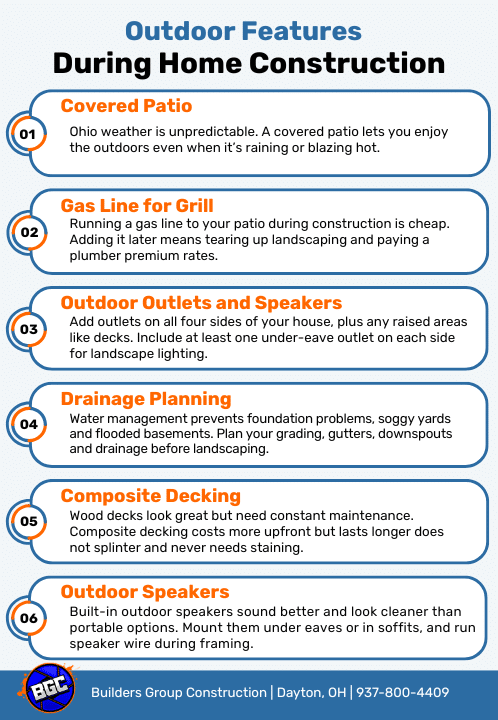
Covered Patio
Ohio weather is unpredictable. A covered patio lets you enjoy the outdoors even when it’s raining or blazing hot.
Plan for ceiling fans, lighting, and outlets. If you want outdoor speakers or a TV, run the wiring now.
Gas Line for Grill
Running a gas line to your patio during construction is cheap. Adding it later means tearing up landscaping and paying a plumber premium rates.
Natural gas grills are more convenient than propane. No tanks to refill, no running out mid-cookout.
Outdoor Outlets and Speakers
Add outlets on all four sides of your house, plus any raised areas like decks. Include at least one under-eave outlet on each side for landscape lighting.
Pre-wire for outdoor speakers if you like music while you grill or relax. The wiring is invisible when done during framing.
Drainage Planning
Water management prevents foundation problems, soggy yards, and flooded basements. Plan your grading, gutters, downspouts, and drainage before landscaping.
French drains, dry wells, and swales direct water away from your home. Your builder should address this as part of site prep.
Composite Decking
Wood decks look great but need constant maintenance. Composite decking costs more upfront but lasts longer, doesn’t splinter, and never needs staining.
For deck remodeling or new construction, composite is usually worth the investment.
Outdoor Speakers
Built-in outdoor speakers sound better and look cleaner than portable options. Mount them under eaves or in soffits, and run speaker wire during framing.
How Builders Group Construction Helps Homeowners Plan These Features
Adding all these features takes planning. That’s where working with an experienced design-build team makes a difference.
At BGC, we’ve been helping Dayton-area homeowners build and remodel for 75+ years combined. Our team includes:
Brittany Gilmore, our Design and Sales lead, brings 8+ years of design experience and an Art Institute education to every project.
Mark Schulte handles sales and structural work. He knows building codes inside and out and sources authentic materials, including a time he drove to Virginia to get the perfect timber for a client’s project.
Justin Vaughn, our Project Manager, is a U.S. Army veteran who’s been around construction since age 5. He brings precision and care to every detail.
We follow a proven 12-step process from first consultation to final walkthrough. You’ll meet your actual installer early in the process. Our pricing is transparent, our work is guaranteed, and we’re locally owned right here in Ohio.
We serve Dayton and more than 20 surrounding cities, including Beavercreek, Centerville, Kettering, Miamisburg, Springboro, and more. Check our full service area to see if we cover your neighborhood.
FAQs
What features do most people regret not adding to their new home?
Outlet placement tops the list. People wish they’d added more outlets in kitchens, bedrooms, closets, and outdoors. Motion-sensor lights in pantries and closets are another common regret, along with more storage space throughout the home.
What are the best smart features to include during construction?
Pre-wiring for ethernet (CAT6), whole-house audio, and security cameras gives you flexibility. Smart thermostats pay for themselves through energy savings. An EV-ready outlet in the garage prepares you for the future.
Where should I add extra outlets when building a home?
Focus on kitchen islands, both sides of beds, inside closets, pantries, under eaves for holiday lights, and your garage. Don’t forget recessed outlets behind where TVs and beds will go.
Are heated floors worth the cost in a new build?
In Ohio, absolutely. Bathroom heated floors cost $500-800 and make cold mornings comfortable. The energy cost is minimal, and the daily comfort is significant.
Should I pre-wire my home for future tech?
Yes. Running CAT6 ethernet, speaker wire, and security camera cables during construction costs a fraction of what retrofitting would. Even if you don’t use it immediately, you’ll have options.
What kitchen upgrades offer the best long-term value?
Workstation sinks, pull-out drawers instead of lower cabinets, under-cabinet lighting, and a pantry-to-garage door all add daily convenience. Quality countertops and appliances also hold their value.
What are good pet-friendly features to add to a new build?
A dog wash station in the mudroom or garage is the most popular. Built-in litter box cabinets, outdoor hot/cold hose faucets, and durable flooring also help pet owners.
Should I add a mudroom if my floor plan is small?
Even a small mudroom makes a big difference. A compact space with hooks, a bench, and a few cubbies keeps clutter from spreading through your home. It’s worth squeezing in if possible.
Do hidden rooms or hidden pantries increase home value?
They definitely add appeal. Buyers love unique features, and hidden doors create a “wow” moment during showings. Whether they increase appraised value depends on your market, but they make your home more memorable.
How do I choose the right custom builder for these upgrades?
Look for experience, transparency, and local knowledge. Ask about their process, meet the team who’ll actually do the work, and check references. A good builder helps you prioritize features that fit your budget and lifestyle.
Ready to Plan Your Custom Home?
Building a home is your chance to get everything right. The features on this list might seem small individually, but together they create a home that works exactly the way you want it to.
At Builders Group Construction, we help Ohio homeowners plan and build homes they love. Our team brings decades of experience, local knowledge, and a commitment to doing things right.
Ready to start planning? Contact BGC for a free consultation. We’ll walk through your wish list, help you prioritize, and show you what’s possible within your budget.
Call us at 937-800-4409 or fill out our online form to get started. Let’s build something great together.