Commercial renovations can do more than refresh the appearance of your business. A well-planned remodel can improve how a space functions, create a better experience for employees, customers, tenants, and visitors, and help a property remain competitive in a changing market. But commercial projects also involve unique considerations, including business operations, budgets, permitting, accessibility, safety, and construction schedules.
In 2026, businesses are placing greater emphasis on flexible spaces, energy efficiency, modern technology, improved lighting and acoustics, durable materials, and layouts that can adapt as needs change. For many businesses, the goal is not simply to create a more attractive space but to build an environment that supports productivity, customer experience, and long-term growth.
At Builders Group Construction (BGC), our team brings 75+ years of combined experience to commercial remodeling projects throughout Dayton and surrounding communities. We understand the practical challenges that can arise during commercial space remodeling and help business owners plan each stage with greater clarity.
This guide covers the key factors to consider before starting a commercial renovation, from defining your goals and establishing a realistic budget to planning permits, design, construction schedules, materials, and business continuity. With the right preparation, you can reduce disruptions and create a commercial space that is built to serve your business today and adapt to its future needs.
1. Define the Purpose of Your Commercial Renovation
Start with a clear goal. Why are you renovating? Your answer shapes every decision that follows.
Functional improvements often drive commercial projects. You might need modern layouts that support collaboration. Technology upgrades like better electrical systems or network infrastructure can make your space work for today’s business needs.
Aesthetic goals matter too. Your space should match your brand identity. Fresh paint, updated lighting, and modern finishes create the right impression on clients and customers. Curb appeal affects how people view your business before they walk through the door.
Compliance and safety updates aren’t optional. ADA requirements, fire codes, and building standards change over time. Older buildings often need upgrades to meet current regulations. Address these early to avoid costly surprises.
Tenant considerations play a big role for property owners. Modern spaces attract better tenants and command higher rents. Improvements that reduce vacancies pay for themselves over time.
2. Conduct a Full Property Assessment
Don’t guess about your building’s condition. A thorough assessment reveals what you’re working with.
Check structural integrity first. Foundation issues, roof problems, and wall damage affect everything else. These fixes can’t wait.
Review your HVAC, plumbing, and electrical systems. Older systems waste energy and break down more often. Plan for upgrades if your systems are past their prime.
Consider your current layout’s pain points. Where does traffic flow poorly? Which areas feel cramped? What spaces go unused? These insights help you design better solutions.
Bring in professionals early. Architects understand space planning. Engineers assess structural needs. MEP consultants (mechanical, electrical, plumbing) identify system requirements. Their input prevents expensive mistakes later.
3. Plan for Compliance and Permits
Dayton’s building codes and zoning laws aren’t suggestions. You need proper permits before work begins.
Building codes cover structural requirements, electrical standards, plumbing specs, and fire safety measures. Commercial buildings face stricter rules than homes. Your contractor should know these inside and out.
ADA compliance ensures accessibility for everyone. Doorway widths, ramp slopes, bathroom facilities, and parking spaces all have specific requirements. Failing to meet ADA standards opens you to legal problems.
Fire safety regulations protect occupants. Exit signs, sprinkler systems, fire doors, and alarm systems must meet local fire codes. These systems need regular inspections even after installation.
Occupancy classifications affect what renovations you can do. Changing from office space to retail? You’ll need different permits and might face new requirements.
4. Set a Realistic Budget and Add a Contingency
Money matters more than almost anything else. A solid budget keeps your project on track.
Include all the obvious costs: labor, materials, permits, design fees, and inspections. Get detailed quotes from contractors. Compare prices but remember the lowest bid isn’t always the best value.
Don’t forget hidden costs. Asbestos removal in older buildings can run thousands of dollars. Structural damage you discover during demolition needs immediate attention. Weather delays happen. Supply chain issues affect material delivery.
Add a 10 to 20 percent contingency buffer. This cushion covers surprises without derailing your project. Most commercial renovations hit at least one unexpected expense.
Break your budget into line items. Track spending as work progresses. This helps you spot overruns early when you can still adjust.
5. Timeline Management: Renovation Phases
Commercial projects move through distinct phases. Understanding each one helps you plan better.
Pre-construction covers design, budgeting, material selection, and permits. This phase takes longer than most people expect. Rush it and you’ll pay later. Allow several weeks or months depending on project size.
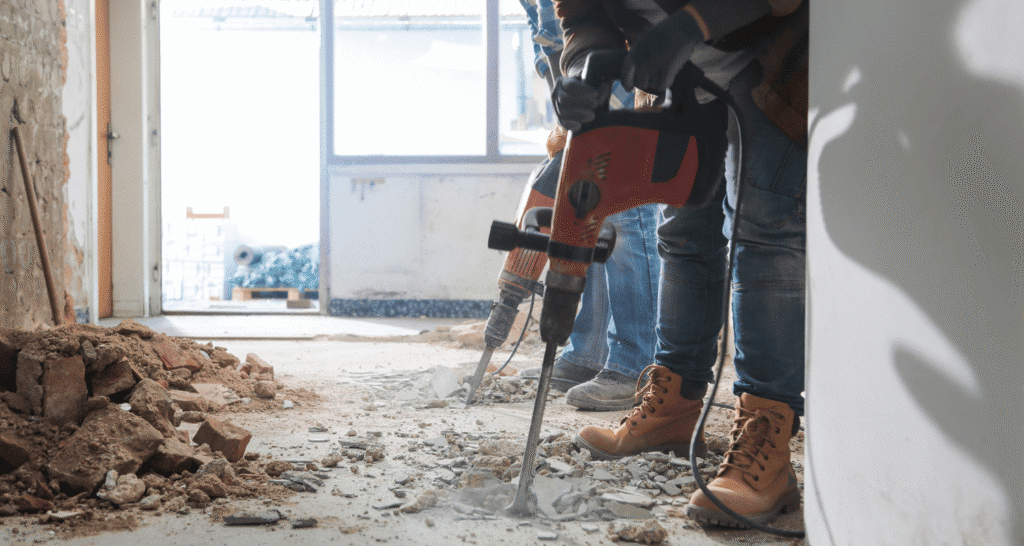
Demolition and discovery often bring surprises. Old buildings hide problems behind walls and under floors. Expect the unexpected during this phase. Budget extra time for discoveries that need immediate attention.
Build phase includes the bulk of construction work. Inspections happen throughout this phase. MEP work (mechanical, electrical, plumbing) comes first. Then drywall, finishes, and final details. Each step depends on the previous one finishing correctly.
Final walkthrough and punch list wraps things up. Walk through your space with your contractor. Note anything that needs fixing or adjusting. Address these items before making final payment.
Total timeline? Small projects might take two to three months. Larger renovations can run six to twelve months or more. Be realistic about timing and build in buffer days for delays.
6. Prioritize Energy Efficiency and Sustainability
Green upgrades save money and help the environment. Modern commercial spaces should be efficient.
LED lighting cuts energy use by 75 percent compared to old bulbs. LEDs last longer too, reducing maintenance costs. The upfront investment pays back in one to three years.
High-efficiency HVAC systems reduce heating and cooling costs. Modern units use less energy and maintain better temperature control. Proper insulation upgrades make HVAC systems work even better.
Water-saving fixtures lower utility bills. Low-flow toilets, sensor faucets, and efficient water heaters all contribute. These upgrades matter more in high-traffic commercial spaces.
Smart tech integrations give you control over energy use. Programmable thermostats, occupancy sensors, and automated lighting systems ensure you’re not wasting power when spaces sit empty.
Long-term ROI on efficiency upgrades is strong. You’ll see lower monthly bills for years. Some improvements qualify for tax credits or sustainability certifications that boost property value.
7. Think About Tenant and Customer Experience
Construction disrupts normal operations. Plan for this reality.
Communicate clearly with tenants before work starts. Explain what’s happening, how long it will take, and what inconveniences they might face. Regular updates during construction keep everyone informed.
Use signage to guide people around construction zones. Clear pathways matter for safety and accessibility. Temporary barriers should look professional, not thrown together.
Consider phased work to minimize disruption. Can you renovate one floor while others stay operational? Evening and weekend work might cost more but keeps business running during peak hours.
Prioritize accessibility in your design. Make sure customers and employees with disabilities can navigate your space easily. This isn’t just about compliance. It’s about creating welcoming spaces for everyone.
Focus on comfort and aesthetics in your final design. Natural light, good air quality, and appealing finishes create positive experiences. People notice these details, even if they can’t articulate why a space feels good.
8. Hire a Qualified Commercial Contractor
Your contractor choice makes or breaks your project. Choose wisely.
Look for licensed and insured professionals. Verify their credentials. Check that they’re IBC compliant. Make sure their insurance covers your project adequately.
Avoid the lowest bid. Cheap contractors cut corners somewhere. Those corners might be material quality, worker experience, or safety practices. Problems from cheap work cost more to fix than you saved.
Prioritize experience and quality. Ask for references from similar projects. Visit completed jobs if possible. Talk to past clients about their experience.
Review their process. How do they handle changes? What’s their communication style? Who will be your day-to-day contact? These details matter during a months-long project.
We serve Brookville, Dayton, Kettering, Centerville, and 20+ other Ohio communities. Our 12-step process ensures no surprises from consultation to final walkthrough.
9. Document Everything and Prepare for Close-Out
Paper trails protect everyone. Keep careful records throughout your project.
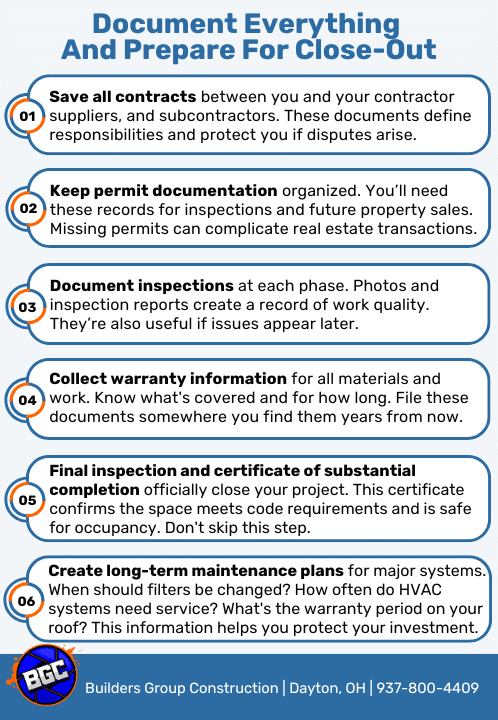
Save all contracts between you and your contractor, suppliers, and subcontractors. These documents define responsibilities and protect you if disputes arise.
Keep permit documentation organized. You’ll need these records for inspections and future property sales. Missing permits can complicate real estate transactions.
Document inspections at each phase. Photos and inspection reports create a record of work quality. They’re also useful if issues appear later.
Collect warranty information for all materials and work. Know what’s covered and for how long. File these documents somewhere you can find them years from now.
Final inspection and certificate of substantial completion officially close your project. This certificate confirms the space meets code requirements and is safe for occupancy. Don’t skip this step.
Create long-term maintenance plans for major systems. When should filters be changed? How often do HVAC systems need service? What’s the warranty period on your roof? This information helps you protect your investment.
Frequently Asked Questions
What is the first step in a commercial renovation project?
Define your goals clearly. Know why you’re renovating and what success looks like. Then conduct a thorough property assessment to understand your building’s current condition. These two steps inform every decision that follows.
How much does it cost to renovate a commercial space in Dayton?
Costs vary widely based on scope and size. Simple updates like paint and flooring might run $40 per square foot. Full renovations with structural changes, new systems, and high-end finishes can exceed $250 per square foot. Get detailed quotes from contractors familiar with Dayton commercial work.
Do I need permits for commercial renovations in Ohio?
Yes, almost always. Commercial projects face stricter permit requirements than residential work. You’ll need permits for structural changes, electrical work, plumbing modifications, and HVAC updates. Your contractor should handle the permit process.
How long does a commercial renovation typically take?
Small projects take two to three months. Medium renovations run four to six months. Large-scale remodels can take eight to twelve months or more. Pre-construction planning adds several weeks to months before physical work begins. Factor in extra time for permit approvals and inspections.
What are common mistakes to avoid during renovation?
Skipping the contingency budget causes problems when surprises appear. Choosing contractors based solely on price often leads to quality issues. Poor communication with tenants creates frustration. Rushing the planning phase forces expensive changes later. Ignoring energy efficiency means higher operating costs for years.
How can I renovate without disrupting my business operations?
Phase your work to keep some areas operational. Schedule noisy or disruptive work during off-hours. Use clear signage and barriers to separate construction from active spaces. Communicate timelines clearly with employees and customers. Work with a contractor experienced in occupied renovations who understands how to minimize disruption.
Planning Your Commercial Remodel?
Commercial renovations require careful planning, clear communication, and experienced professionals. Get these elements right and you’ll create a space that serves your business well for years.
At BGC, we bring 75+ years of combined experience to every project. We’re insured, IBC-compliant, and guarantee our work. Our veteran-led team handles commercial property renovation throughout Dayton and surrounding communities. Ready to start? Schedule a free consultation with our Dayton team today.