A kitchen remodel remains one of the most significant investments many homeowners make in their homes. In 2026, homeowners are putting more thought into how their kitchens function day to day—not just how they look. From customized storage and better lighting to durable materials, flexible layouts, and integrated technology, today’s renovations are increasingly focused on creating spaces that are practical, comfortable, and built to last.
With so much time and money invested in a kitchen renovation, small planning mistakes can become expensive problems later. Choosing finishes before confirming the layout, underestimating storage needs, overlooking lighting, sacrificing workspace for aesthetics, or failing to plan for appliances and electrical requirements can affect both the appearance and usability of the finished kitchen.
The good news is that most common remodeling problems can be prevented with careful planning and the right professional guidance. This guide covers 13 common kitchen remodel mistakes and explains what can go wrong, why each issue matters, and how to avoid it. Whether you are planning a complete renovation or making targeted improvements, these insights can help you create a kitchen that looks great, functions efficiently, and continues to meet your needs for years to come.
Not Having a Realistic Budget
Most kitchen remodels exceed the original budget by 20% to 30%. Homeowners often underestimate costs and fail to plan for unexpected issues that arise during construction.
Start by creating a detailed budget before work begins. List every element including kitchen cabinets, countertops, appliances, flooring, lighting, plumbing, electrical work, and labor. Research real costs in the Dayton area instead of relying on national averages.
Common Hidden Costs
Several expenses surprise homeowners. Permit fees for electrical and plumbing work add up quickly. Structural problems like water damage or outdated wiring often appear once walls are opened. Appliance delivery and installation frequently cost more than expected.
Set aside 15% to 20% of your total budget as a contingency fund. This buffer covers surprises without stalling your project. Track expenses as work progresses to catch budget issues early.
At Builders Group Construction, our team provides transparent pricing from the start. Brittany Gilmore, our design specialist with over eight years of experience, helps homeowners prioritize features that matter most while staying within budget.
Poor Planning and Lack of Kitchen Inventory
Starting a remodel without understanding how you actually use your kitchen leads to poor design choices and long-term frustration.
Take a detailed inventory before making decisions. Identify which appliances you use daily. Note where traffic jams occur during meal prep. Consider how many people typically work in the kitchen at once.
Document current pain points. Identify which cabinets overflow and which remain unused. Observe where you naturally stand while cooking. These details guide smarter layout decisions.
Think about your cooking habits. If you bake often, you may need dedicated counter space. If multiple family members cook together, circulation space matters. Your real habits should drive design decisions, not magazine photos.
Inadequate Lighting Design
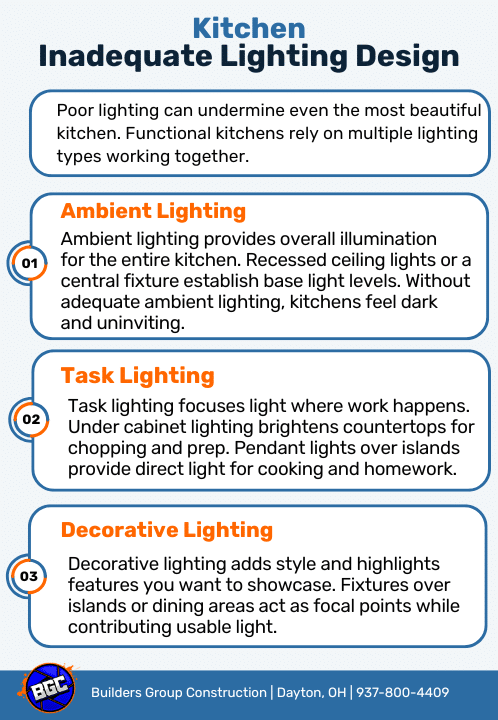
Poor lighting can undermine even the most beautiful kitchen. Functional kitchens rely on multiple lighting types working together.
Ambient Lighting
Ambient lighting provides overall illumination for the entire kitchen. Recessed ceiling lights or a central fixture establish base light levels. Without adequate ambient lighting, kitchens feel dark and uninviting.
Task Lighting
Task lighting focuses light where work happens. Under cabinet lighting brightens countertops for chopping and prep. Pendant lights over islands provide direct light for cooking and homework.
Install task lighting in front of work areas rather than behind you. Overhead lights cast shadows when you stand at the counter. Front-facing light eliminates this issue.
Decorative Lighting
Decorative lighting adds style and highlights features you want to showcase. Fixtures over islands or dining areas act as focal points while contributing usable light.
Relying on a single overhead fixture creates harsh shadows and poor visibility. Layering all three lighting types ensures the kitchen functions well at any time of day.
Not Considering Workflow and Kitchen Triangle
The kitchen triangle connects the sink, stove, and refrigerator. This layout improves efficiency by reducing unnecessary movement while cooking.
Each side of the triangle should measure between four and nine feet. Too close feels cramped. Too far increases wasted steps.
Store frequently used items near their work zones. Keep pots near the stove. Store cutting boards by the sink. Place dishes close to the dishwasher for easier unloading.
Also consider overall traffic flow. Someone should be able to access the refrigerator without blocking the cook. Dishwasher doors should not swing into walkways. These details matter when multiple people use the space.
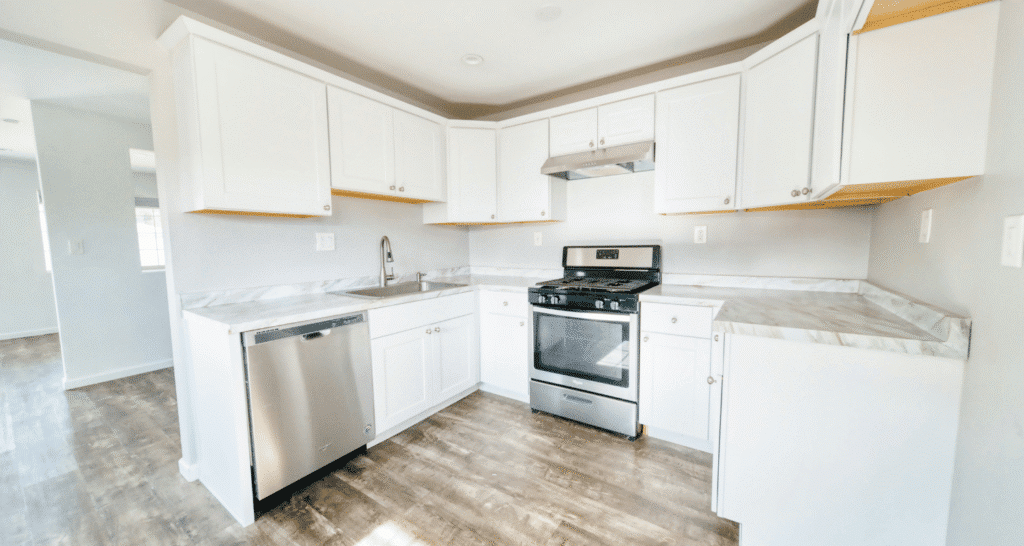
Skipping Measurements and Clearances
Skipping measurements leads to appliances that do not fit and doors that cannot open fully.
Allow at least 42 inches between opposing countertops for comfortable movement. In smaller kitchens, 36 inches is the minimum, but anything tighter creates problems.
Measure appliance dimensions carefully, including door swing. New appliances are often larger than older models. Confirm that oven, dishwasher, and refrigerator doors open fully without hitting cabinets or islands.
Corner cabinets need special planning. Ensure doors and drawers do not collide when opened. Leave adequate clearance around hardware so pulls do not strike adjacent surfaces.
Underestimating Storage Needs
Insufficient storage is one of the most common regrets after a kitchen remodel.
Vertical Storage and Deep Drawers
Extend cabinets to the ceiling to maximize storage. The gap above standard cabinets collects dust and wastes space. Full-height cabinets store items you use less frequently.
Deep drawers outperform lower cabinets for pots and pans. Everything is visible at once, eliminating the need to dig through dark spaces. Drawers also improve access in corner areas.
Forgotten Spaces
Identify underused areas. Toe kick spaces beneath base cabinets can hold shallow drawers. Islands can provide storage on all sides. Tall pantry cabinets make excellent use of narrow areas.
Design storage around what you own. Measure large pots, small appliances, and serving pieces. Storage should fit your items, not the other way around.
Misplaced or Oversized Kitchen Islands
Kitchen islands add value, but only when sized and placed correctly.
An island requires at least 36 inches of clearance on all sides, with 42 inches preferred. Less space creates bottlenecks and makes the kitchen feel crowded.
Evaluate your kitchen size and layout honestly. Smaller kitchens often work better without islands. A movable cart can provide flexible prep space when needed.
Island placement should support workflow. Poor positioning disrupts the kitchen triangle and blocks access to appliances. The island should improve efficiency, not interfere with it.
Consider how the island will be used. Seating, storage, sinks, and cooktops all affect size and placement decisions.
Ignoring Electrical and Outlet Placement
Modern kitchens require more electrical access than most homeowners expect.
Plan outlets every four feet along counter walls to ensure appliances can be used wherever you are working. Include outlets on islands for charging devices and running small appliances.
Place outlets just above the backsplash instead of higher on the wall. This keeps cords out of work areas and creates a cleaner look. USB charging outlets add convenience for everyday use.
Plan for future needs. Adding extra outlets during a remodel costs far less than adding them later. Major appliances often require dedicated circuits to prevent breaker issues.
Choosing Trendy Over Timeless
Design trends change quickly. What feels fresh today can look outdated within a few years.
Choose classic styles for expensive, permanent features. Cabinet colors like white, gray, and natural wood stand the test of time. Subway tile backsplashes and neutral flooring maintain long-term appeal.
Use trends in elements that are easy to change. Paint colors, hardware, and light fixtures allow for updates without major expense. This approach keeps your kitchen current without costly overhauls.
Consider resale value. Extremely bold design choices appeal to fewer buyers. Timeless kitchens with quality materials attract a wider audience.
Overlooking Function for Aesthetics
A kitchen that looks great but functions poorly causes daily frustration.
Some design choices prioritize appearance over usability. Open shelving requires constant cleaning. Glass cabinet fronts demand perfect organization. Matte black faucets show water spots and fingerprints easily.
Evaluate how each design decision will perform in real life. Ensure shelves are reachable. Confirm countertop materials resist stains. Choose sinks deep enough for large pots.
Balance appearance with practicality. Use durable finishes in high-use areas and reserve delicate materials for spaces with less wear. A kitchen should look good and perform well every day.
Hiring the Wrong Contractor or DIY Overload
Kitchen remodels involve complex plumbing, electrical, and structural work. DIY errors often cost more to correct than hiring professionals from the start.
Why Professional Help Matters
Experienced contractors understand building codes and permit requirements. They identify problems early and coordinate trades efficiently to keep projects on schedule.
At BGC, our team brings 75 years of combined experience to every kitchen remodel. Justin Vaughn, our Army veteran project manager, has worked in plumbing since age five and ensures every detail meets code and functions correctly.
Choosing the Right Team
Interview multiple contractors before making a decision. Ask for references from recent kitchen projects. Verify licenses and insurance coverage. Review feedback from past clients.
Choose contractors who communicate clearly. Timelines, costs, and potential issues should be explained upfront. Avoid anyone requesting large upfront payments or unable to provide a detailed contract.
Flooring and Material Quality Mistakes
Low-quality materials often lead to regret. Short-term savings disappear when replacements are needed a few years later.
Flooring Choices
Kitchen floors endure spills, dropped items, and heavy foot traffic. Luxury vinyl plank offers durability at reasonable cost. Porcelain tile handles moisture well and lasts for decades. Hardwood adds warmth but requires maintenance.
Avoid low-quality laminate in kitchens. Water damage occurs easily and repairs are obvious. Trendy materials like concrete require careful maintenance planning.
Other Material Considerations
Countertops must resist heat and stains. Quartz provides durability with minimal maintenance. Granite offers natural beauty and longevity. Laminate works for limited budgets but shows wear faster.
Cabinet build affects lifespan. Solid wood or plywood boxes outlast particle board. Soft-close hardware improves daily use. These upgrades cost more upfront but extend the life of the kitchen.
Not Planning for Kitchen Workflow
Poor workflow causes constant backtracking and slows meal preparation.
Place the dishwasher near the sink for efficient loading. Store dishes nearby to simplify unloading. Keep cooking utensils within arm’s reach of the stove.
Create zones for specific tasks. Group baking supplies together. Design a coffee station with mugs and accessories in one area. Organized zones reduce clutter and save time.
Design around how your household functions. Consider multiple cooks, children accessing snacks, and guest movement. Workflow planning should reflect real daily habits.
FAQs
What is the biggest mistake to avoid in a kitchen remodel?
Poor layout planning causes the most long-term regrets. Bad workflow, cramped spaces, and blocked traffic patterns frustrate you daily. Take time to map out how you’ll actually use the space before making any final decisions.
How can I make sure my kitchen remodel doesn’t go over budget?
Create a detailed budget that includes all costs plus a 15% to 20% contingency fund. Track every expense as work progresses. Make material and design choices early to avoid delays and price changes. Work with a contractor who provides transparent pricing.
Is it worth hiring a designer or contractor for a kitchen remodel?
Yes. Professionals help you avoid expensive mistakes in layout, lighting, and material choices. They understand building codes and manage permits. Their experience typically saves you more money than their fees cost.
How do I plan proper lighting for a kitchen?
Use three lighting layers. Ambient lighting illuminates the whole room. Task lighting brightens work areas like counters and sinks. Decorative lighting adds style and highlights features. This combination ensures adequate light for all activities.
Should I follow kitchen design trends?
Use trends carefully. Choose classic styles for expensive permanent features like cabinets and countertops. Add trendy touches through paint, hardware, and accessories that change easily and affordably.