Your outdoor space is an extension of your home. A well-designed yard improves curb appeal, creates functional living areas, and increases property value. Whether you have a sprawling backyard or a small patio, smart planning makes every square foot work harder.
At Builders Group Construction, we have helped transform outdoor spaces across Dayton and surrounding Ohio communities for decades. Our 75 plus years of combined experience includes deck building, porch installations, and outdoor living projects that extend homes into nature. We bring the same attention to detail to business owners planning a commercial space upgrade, so whether your project is at home or at work, the process is built around how you’ll actually use the space. Here is your complete guide to planning outdoor living spaces that work.
Understanding Your Outdoor Living Needs
Before buying plants or scheduling construction, define how you will actually use the space.
- Entertainment: Do you host dinner parties or BBQs? You will need dining areas and possibly outdoor cooking facilities.
- Relaxation: Are you looking for a quiet retreat? Create intimate seating areas away from high-activity zones with privacy screens.
- Family and Pets: Does your space need to be kid or pet friendly? Designate play areas with safe surfaces and keep delicate plants away from high-traffic zones.
Understanding your priorities shapes every design decision. Don’t plan spaces you won’t actually use.
Planning Your Outdoor Layout
Think about your outdoor space like interior rooms. Each area should connect logically and serve a clear purpose.
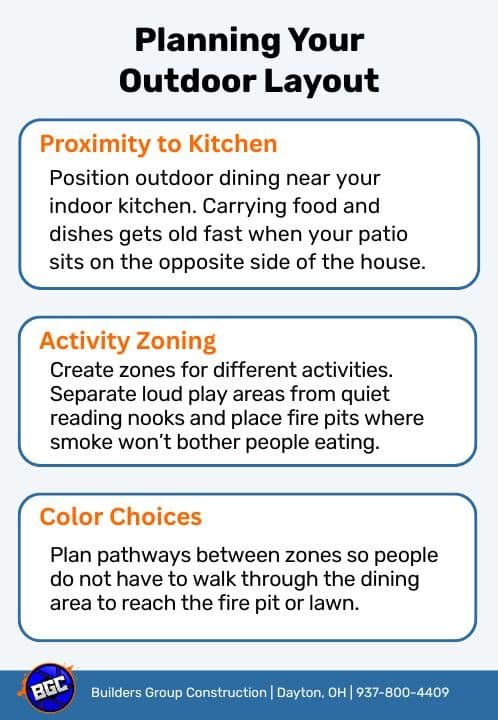
- Proximity to Kitchen: Position outdoor dining near your indoor kitchen. Carrying food and dishes gets old fast when your patio sits on the opposite side of the house.
- Activity Zoning: Create zones for different activities. Separate loud play areas from quiet reading nooks and place fire pits where smoke won’t bother people eating.
- Traffic Flow: Plan pathways between zones so people do not have to walk through the dining area to reach the fire pit or lawn.
Our design-build remodel approach helps plan outdoor spaces that function smoothly.
Working With Your Property’s Natural Features
Smart planning works with nature instead of against it.
Sun exposure affects comfort and plant choices. Track which areas get morning versus afternoon sun. In Dayton’s hot summers, afternoon shade makes outdoor spaces more comfortable. South and west-facing areas get the most intense heat.
Wind patterns impact usability. Calm morning areas might have strong evening breezes. Don’t position fire pits where smoke blows toward seating. Avoid placing dining areas in wind tunnels.
Existing trees provide shade and character. Design around mature trees instead of removing them. Their shade reduces cooling costs and creates comfortable outdoor spaces.
Slopes and drainage require attention. Water should flow away from your house and outdoor living areas. Poor drainage creates mud, kills plants, and causes foundation problems.
Creating Comfortable Outdoor Spaces
Comfort determines how much you’ll actually use outdoor areas.
Shade is essential in Ohio summers. Pergolas provide partial shade while maintaining an open feel. Our pergola installation team builds structures that last decades.
Covered patios protect from sun and rain. Porch coverings extend usability during brief showers and provide relief from intense sun.
Umbrellas offer flexible shade. Move them as the sun shifts. Store them during winter to prevent damage.
Trees create natural shade but take years to mature. Plant them now for future benefit. Choose species appropriate for Dayton’s climate.
Designing Functional Hardscape Elements
Hardscaping provides foundations for outdoor living.
Patios create level surfaces for furniture. Stone, concrete, and pavers all work well. Choose materials that complement your home’s style. Allow proper drainage so water doesn’t pool.
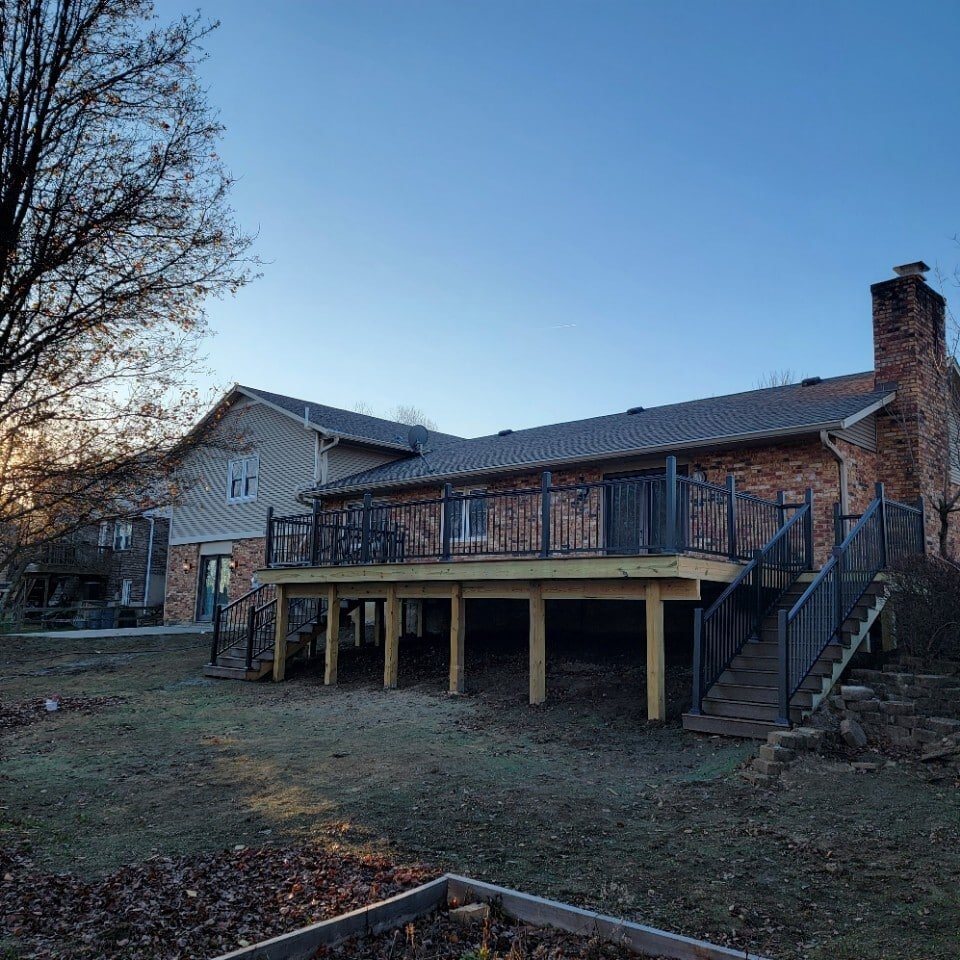
Decks extend living space from elevated doorways. Our deck remodeling services build structures that handle Ohio’s freeze-thaw cycles.
Walkways connect different zones. Define paths clearly to prevent worn grass. Use materials that match other hardscape elements for unity. The same layout thinking applies when planning customer flow for a retail space remodeling project, where clear paths matter just as much as they do in a backyard.
Retaining walls manage slopes and create level areas. They also add seating and visual interest.
Plan hardscape first before choosing plants. These permanent features cost more to change later.
Selecting Plants for Your Outdoor Space
Plants soften hard surfaces and add seasonal interest.
Choose low-maintenance varieties unless you enjoy gardening. Some plants need constant pruning, deadheading, or pest control. Others thrive with minimal care.
Native plants adapted to Ohio conditions need less water and care. They also support local pollinators and wildlife better than exotic species.
Consider mature sizes when planting. That cute shrub might grow six feet wide and block your walkway. Space plants based on their full-grown dimensions.
Layering creates depth and interest. Place taller plants in back, medium heights in middle, short plants in front. This adds dimension and makes spaces feel larger.
Year-round interest matters in climates with distinct seasons. Mix evergreens with deciduous plants. Choose varieties with different bloom times for continuous color.

Adding Outdoor Cooking and Dining Areas
Outdoor kitchens and dining spaces extend your living area.
Start simple with a quality grill and prep counter. Add features over time as budget allows. Even basic setups improve outdoor entertaining significantly.
Built-in grills and counters create permanent cooking stations. Include storage for tools and supplies. Position near house utilities for easier hookups.
Outdoor refrigerators keep drinks cold without indoor trips. Small units fit tight budgets. Larger models store food for entire parties.
Dining areas need level surfaces and adequate space. Allow room to pull chairs out comfortably. A 10×12 patio fits a standard six-person table with walking space.
Similar planning considerations apply to indoor kitchen remodeling projects, and the same design-first mindset carries over to a broader commercial space remodeling initiative for business owners.
Similar planning considerations apply to indoor kitchen remodeling projects.
Creating Ambiance With Fire and Water
Fire and water features add sensory appeal.
Fire pits extend the outdoor season into cool evenings. Permanent stone fire pits make statements. Portable fire bowls offer flexibility. Position seating in circles around fire for conversation.
Outdoor fireplaces provide more substantial heat and visual impact. They work well as focal points in large outdoor rooms.
Water features add soothing sounds. Simple fountains work in small spaces. Larger ponds create ecosystems that attract wildlife.
Both elements require planning for utilities and safety. Gas lines for fire features and electrical for water pumps need professional installation.
Lighting Your Outdoor Living Space
Good lighting extends usability after dark and improves safety.
Task lighting illuminates cooking and dining areas. Install lights over grills and food prep surfaces. Light dining tables adequately for seeing food and guests.
Ambient lighting creates mood. String lights add a festive atmosphere. Landscape lighting highlights attractive features like trees or water elements.
Safety lighting brightens steps and pathways. Prevent trips and falls with adequate illumination along walking routes. Use fixtures designed for outdoor use.
Motion sensors add security while conserving energy. They activate when someone approaches, deterring intruders while welcoming expected guests.
Budgeting Your Outdoor Living Project
Realistic budgets prevent halfway-finished projects.
- Basic ($5,000 to $15,000): Includes a small patio, basic plantings, and minimal features.
- Mid-Range ($15,000 to $40,000): Expect larger decks, built-in features, quality lighting, and more extensive plantings.
- Complete Outdoor Rooms ($40,000 to $100,000+): Full kitchens, high-end fire features, and extensive hardscaping.
If your budget is tight, we recommend phasing the project: complete the hardscaping first and add plants or luxury features over multiple seasons.
Frequently Asked Questions
How do you design an outdoor living space?
Start by defining how you’ll use it. Create zones for different activities. Plan hardscaping first. Work with your property’s natural features like sun, wind, and slopes. Add plants and features that match your maintenance abilities and budget.
What should I include in an outdoor living area?
Essential elements include comfortable seating, shade or cover, lighting, and pathways. Optional additions include outdoor kitchens, fire pits, water features, dining areas, and play spaces. Choose features based on how you’ll actually use the space.
How much does an outdoor living space cost?
Basic spaces cost $5,000 to $15,000. Mid-range projects run $15,000 to $40,000. Complete outdoor rooms with full kitchens and extensive features reach $40,000 to $100,000. Costs vary based on size, materials, and features included.
What is the best layout for outdoor living?
The best layout depends on your needs. Generally, place dining near the kitchen, position seating to enjoy views, create separate zones for different activities, and ensure smooth traffic flow between areas. Work with your property’s natural features.
How do I make my outdoor space comfortable?
Prioritize shade and lighting. A pergola or high-quality umbrella combined with weather-resistant furniture and ambient lighting will dramatically increase how often you use the space.
What plants are best for outdoor living areas?
Choose low-maintenance native Ohio plants. They require less water and support local pollinators better than exotic species.
How long does it take to build an outdoor living space?
Simple projects take 1 to 2 weeks. Mid-range spaces need 2 to 4 weeks, while complex outdoor rooms can require 8 weeks or more depending on weather and material availability.
Start Planning Your Outdoor Living Space
Builders Group Construction brings decades of experience to outdoor projects in Dayton. We are fully insured, IBC-compliant, and our veteran-led team handles everything from deck building to complete outdoor room installations.
Ready to transform your yard? Call us at 937-800-4409 or schedule your free consultation today. Let’s create the outdoor living space you’ve been dreaming about.