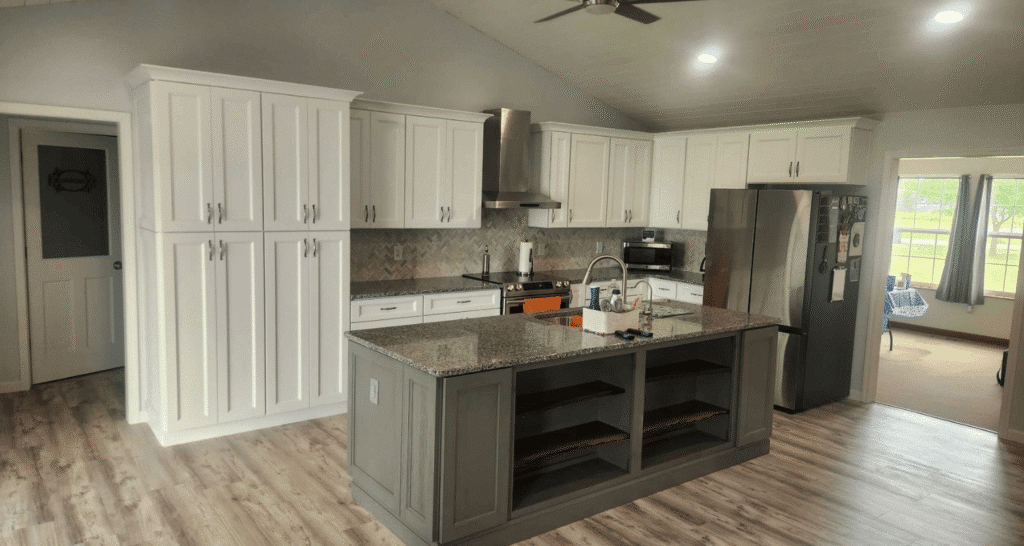
Remember when kitchen desks seemed like a great idea? A built-in spot for paying bills, organizing mail, and planning meals. Fast forward 20 years and most of these spaces collect junk mail, random chargers, and clutter nobody wants.
If you bought a home built in the 1990s or early 2000s, you probably have one of these desk nooks. The good news? That wasted space can become valuable pantry storage your kitchen actually needs.
Converting a kitchen desk to a pantry adds functional storage while removing an outdated feature. The transformation works for DIY enthusiasts and those hiring contractors. Costs range from a few hundred to several thousand dollars depending on your approach.
At Builders Group Construction, we’ve helped Dayton homeowners update kitchens for decades. Our 75 years of combined experience includes countless kitchen desk conversions. We know what works in real homes with real budgets.
Why Convert a Kitchen Desk into a Pantry?
Kitchen desks made sense decades ago. Families needed spots for homework, phone books, and recipe cards. Today’s families use laptops, smartphones, and online recipes instead.
These desk areas waste valuable kitchen space. Most become catch-all zones for stuff nobody knows where else to put. The upper cabinets sit too high for convenient storage. The desk surface collects clutter.
Modern kitchens need storage more than desk space. Groceries, small appliances, and pantry items need homes. Converting unused desk space into pantry storage serves current needs better.
The visual improvement matters too. Cluttered desk areas make kitchens look messy. Clean pantry storage with matching cabinets improves appearance significantly.
Types of Kitchen Desk to Pantry Conversions
Several conversion approaches work depending on your needs and budget.
Full cabinet pantry creates a built-in look. Floor-to-ceiling cabinets replace the desk area completely. This approach integrates seamlessly with existing kitchen cabinets when you match finishes and styles.
Open shelving pantry costs less and works for DIY projects. Remove the desk and add sturdy shelves. This displays items attractively while keeping everything accessible. The open design works well in smaller kitchens.
Pull-out pantry drawers maximize deep desk spaces. Deep cabinets created for desks often waste space. Pull-out drawers bring items forward so nothing gets lost in back corners. This works especially well for canned goods and packaged items.
Butler’s pantry conversion adds both storage and counter space. Install base cabinets with a countertop plus upper storage. This creates a mini prep area perfect for coffee stations or beverage bars.
Our kitchen remodeling services help Dayton homeowners choose the best conversion for their space.
Step-by-Step: How to Convert a Kitchen Desk to a Pantry
The conversion process follows logical steps whether you DIY or hire help.
Step 1 involves removing existing components. Take out the desk surface, drawers, and upper cabinets carefully. Patch any holes in walls. This reveals the full space you have to work with.
Step 2 requires accurate measurements. Measure width, depth, and height precisely. Note any electrical outlets or other features that affect cabinet placement. These measurements determine what fits.
Step 3 means deciding on your layout. Choose between shelves, cabinets, or drawers based on what you’ll store. Consider how you’ll access items. Plan door swings or drawer pulls.
Step 4 is installation time. Mount shelving brackets or install cabinet boxes. Ensure everything is level and properly secured. This step requires basic carpentry skills for DIY or professional help for custom cabinets.
Step 5 adds finishing touches. Install doors if you want closed storage or leave shelves open. Add hardware that matches your kitchen. Paint or stain to match existing finishes.
Step 6 focuses on organization. Add bins, baskets, or pull-out organizers. Label shelves for easy finding. Arrange items logically by type and frequency of use.
Best Storage Solutions for Deep Desk Spaces
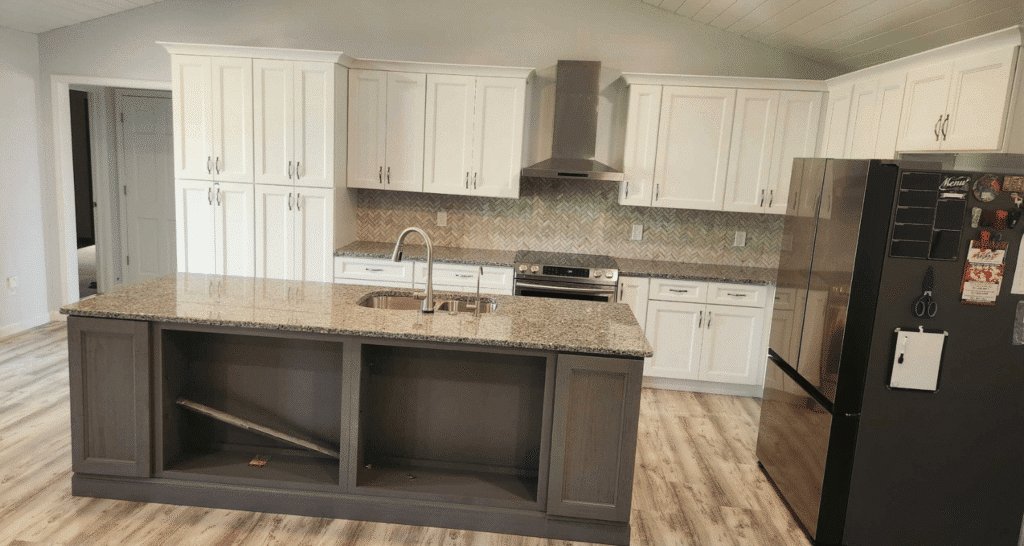
Kitchen desks typically measure 24 inches deep. This depth challenges efficient storage without the right solutions.
Pull-out shelves solve the depth problem perfectly. They slide forward to reveal items stored in back. Install them on heavy-duty glides that support weight.
Lazy Susans work well in corner desk areas. Rotating shelves make everything accessible without reaching into dark corners.
Tiered organizers maximize vertical space inside cabinets. Stepped shelves let you see canned goods, spices, or packaged items at a glance.
Sliding baskets provide flexible storage. Wire or plastic baskets slide out for access then tuck away neatly. They work great for snacks, baking supplies, or cleaning products.
Similar organizational strategies apply to our kitchen cabinet refacing projects throughout Dayton.
Design Tips for a Seamless Look
Professional-looking results require attention to detail.
Match cabinet finishes to existing kitchen cabinets. Order samples to verify color matches. Even slight differences stand out and look cheap.
Use similar hardware throughout. If your kitchen has brushed nickel pulls, use the same on pantry cabinets. Consistency makes everything look intentional.
Align with kitchen style overall. Traditional kitchens need traditional pantry doors. Modern kitchens work better with clean lines and minimal ornamentation.
Add lighting to make pantry contents visible. LED strip lights install easily under shelves. Motion-activated lights turn on automatically when you open doors.
Cost of Converting a Kitchen Desk to Pantry
Budget impacts approach but doesn’t prevent transformation.
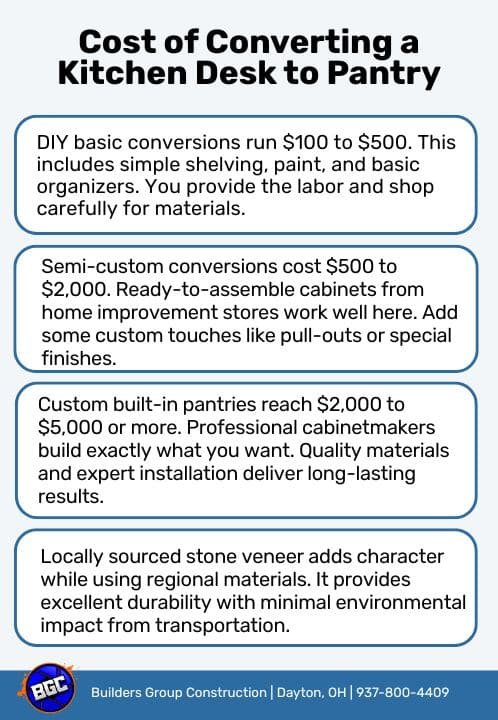
DIY basic conversions run $100 to $500. This includes simple shelving, paint, and basic organizers. You provide the labor and shop carefully for materials.
Semi-custom conversions cost $500 to $2,000. Ready-to-assemble cabinets from home improvement stores work well here. Add some custom touches like pull-outs or special finishes.
Custom built-in pantries reach $2,000 to $5,000 or more. Professional cabinetmakers build exactly what you want. Quality materials and expert installation deliver long-lasting results.
Labor versus DIY makes the biggest cost difference. Skilled carpenters charge $50 to $100 per hour in Dayton. Complex installations take 8 to 16 hours.
Material choices affect price significantly. Stock cabinets cost less than custom. Basic shelving costs less than pull-out drawers. Prioritize based on your budget.
DIY vs Hiring a Contractor
Both approaches work depending on skills and time.
DIY saves money on labor. You control the timeline and make adjustments as you go. This works well if you have carpentry experience and necessary tools.
Hiring contractors delivers professional results faster. Experienced teams complete projects in days instead of weekends. Quality finishes and proper installation ensure long-term satisfaction.
Consider your skill level honestly. Installing shelves is straightforward. Building custom cabinets requires advanced skills. Matching existing finishes perfectly challenges even experienced DIYers.
Our design-build remodeling approach handles kitchen updates from planning through completion.
Before and After Transformation Ideas
Kitchen desk spaces transform into various functional areas.
Desk to pantry cabinet is the classic conversion. Floor-to-ceiling storage replaces wasted desk space. Matching doors create cohesive appearance.
Desk to coffee bar appeals to caffeine lovers. Add a countertop, storage for mugs and coffee supplies, plus a small appliance garage. This creates a dedicated beverage station.
Desk to hidden storage nook works when you want to hide items. Full cabinet doors conceal pantry contents completely. The area looks like regular cabinets from outside.
Each approach serves different needs while improving kitchen function and appearance.
Common Mistakes to Avoid
Learn from others’ errors before starting your project.
Ignoring depth causes frustration. Deep cabinets need pull-out solutions or items get lost. Plan access carefully before installing anything.
Not matching cabinets ruins the seamless look. Slightly different wood tones or door styles stand out badly. Invest in proper matching from the start.
Poor lighting makes pantries hard to use. Dark cabinets hide what’s stored inside. Add adequate lighting before calling the project done.
Wasting vertical space leaves storage on the table. Use the full height from counter to ceiling. Adjustable shelves adapt to different item sizes.
Small Kitchen Pantry Ideas from Desk Spaces
Limited kitchen size requires creative solutions.
Vertical storage maximizes every inch. Tall, narrow cabinets hold surprising amounts while using minimal floor space.
Narrow pull-outs fit in tight spots. Even 6-inch-wide pull-out cabinets provide useful storage for spices, oils, or canned goods.
Multi-functional shelving serves multiple purposes. The same unit stores food, displays cookbooks, and holds small appliances.
Does This Upgrade Increase Home Value?
Kitchen improvements typically return good value at sale time.
Functional storage appeals to all buyers. Pantry space ranks high on buyer wish lists. Removing outdated features modernizes your home.
Modern buyers expect adequate storage. Homes with good pantry space sell faster and for better prices than those without.
The return on investment varies by project cost. Simple conversions pay back fully. Expensive custom work may not return every dollar spent but still adds value.
The real benefit comes from enjoying better kitchen function while you live there. Improved organization and storage make daily life easier for years.
Frequently Asked Questions
Can you turn a kitchen desk into a pantry?
Yes, kitchen desk areas convert easily into pantries. Remove the desk surface and add shelving or cabinets. The space typically measures 30 to 48 inches wide and 24 inches deep, perfect for pantry storage.
How much does it cost to convert a kitchen desk?
Costs range from $100 for basic DIY shelving to $5,000 or more for custom built-in cabinets. Most conversions fall between $500 and $2,000 including materials and labor.
What do I do with a built-in kitchen desk?
Convert it to a pantry, coffee bar, beverage station, or additional cabinet storage. Remove the desk portion and install shelving or cabinets that match your kitchen. Any option beats leaving it as unused clutter space.
Is a pantry better than a desk in the kitchen?
For most modern families, yes. Pantry storage serves daily needs better than desk space. People use laptops and smartphones for tasks that once required kitchen desks. Extra food storage proves more valuable.
How deep should pantry shelves be?
Standard pantry shelves measure 12 to 16 inches deep. This accommodates most packaged foods and canned goods. Kitchen desk spaces often measure 24 inches deep, making pull-out shelves ideal for full depth access.
Transform Your Kitchen Desk Today
Kitchen desk conversions turn wasted space into valuable storage. Whether you choose DIY or professional installation, the improvement makes kitchens more functional and attractive.
Builders Group Construction helps Dayton homeowners update kitchens with practical solutions. We’re fully insured, IBC-compliant, and backed by three Angi Super Service Awards.
Our veteran-led team brings decades of kitchen remodeling experience. You won’t just talk to a salesperson. You’ll meet the installers actually doing your work.
Ready to transform your kitchen desk? Call us at 937-800-4409 or schedule your free consultation today. Let’s turn that cluttered desk into the pantry storage you actually need.