Gym memberships cost money every month. Driving to the gym wastes time. Crowded equipment means waiting for your turn. A basement home gym solves all these problems while adding value to your Dayton home.
Your basement offers perfect space for working out. It is private, climate controlled, and already paid for. Converting unused basement space into a functional gym gives you convenient fitness access whenever you want it.
At Builders Group Construction, we have helped Dayton homeowners transform basements into beautiful, functional spaces for decades. Our 75 plus years of combined experience includes basement renovations that turn dark, unused areas into valuable living spaces. Here is how to create the perfect basement home gym, including the trends shaping home fitness spaces in 2026.
Benefits of a Basement Home Gym
Basements make ideal gym locations for several reasons.
Privacy lets you work out without feeling self-conscious. No one watches you struggle through that last rep. You can grunt, sweat, and push yourself without worrying about others.
Noise isolation protects the rest of your house. Dropping weights, jumping rope, and blasting music stay contained in the basement. Your family can relax upstairs while you crush your workout.
Having a dedicated workout space means equipment stays set up. You will not have to drag dumbbells out of closets or move furniture.
Space for equipment allows you to build the gym you want. Basements typically offer more square footage than spare bedrooms. You can fit multiple workout zones comfortably.
Year round climate control keeps workouts comfortable too. Unlike garage gyms that freeze in winter and bake in summer, basements maintain consistent temperatures.
2026 Basement Gym Trends Worth Knowing
Home gym design keeps evolving, and a few trends stand out this year.
Acoustic panels are showing up in more basement builds. They soften dropped weights and machine noise, so the rest of the house stays quiet during your workout.
Air quality gets more attention than ever. A closed basement space can feel stale fast once your breathing picks up, so a small air purifier and a source of fresh airflow make a real difference.
Biophilic touches, like a few hardy plants, are becoming common in home gyms. Spider plants and peace lilies tolerate the temperature swings of a basement and add a calmer feel to the room.
Multi-functional equipment continues to replace bulky, single-use machines. Homeowners want fewer pieces that do more, which keeps small basements from feeling cluttered.
Clear zoning still matters most. Separating strength, cardio, stretching, and even a small recovery corner for foam rolling keeps a basement gym organized as your routine grows.
Planning Your Basement Gym Layout
Smart layout planning creates functional workout zones.
Strength Training Areas: These need solid flooring and enough ceiling height. Plan space for benches, racks, and free weights. Allow room to move safely around equipment.
Cardio Workout Areas: Hold treadmills, bikes, or rowing machines. Position these where you can watch TV or look out windows if you have them.
Stretching Space: Provides open floor for yoga, core work, and cooldowns. A 6×8 area works for most people. Add mirrors here for form checks.
Storage Zones: Keep equipment organized. Wall mounted racks hold weights. Shelves store resistance bands, foam rollers, and accessories.
Recovery Corner: A small nook for foam rolling, stretching mats, or a massage gun rounds out a modern layout without taking much space.
Measure your basement carefully before buying equipment. Account for ceiling height, support posts, and electrical outlets. Our bathroom remodeling projects often inspire similar creative use of tight basement spaces.
Small Basement Home Gym Ideas
Limited space requires creative solutions.
Wall-mounted equipment saves floor space. Fold-up squat racks attach to walls and fold away when not in use. Pull-up bars mount above doorways.
Foldable workout machines collapse for storage. Folding treadmills, benches, and bikes tuck against walls between workouts.
Vertical storage utilizes wall height. Pegboards hold resistance bands, jump ropes, and small accessories. Wall racks stack dumbbells vertically instead of horizontally.
Multipurpose equipment does multiple jobs, and this is the direction most 2026 home gyms are heading. Adjustable dumbbells replace entire dumbbell sets. Suspension trainers and all-in-one strength stations provide dozens of exercises from a single footprint.
Even an 8×10 basement corner creates functional gym space with smart planning.
Basement Gym Flooring Options
Proper flooring protects your basement and equipment while providing safety.
Rubber Gym Flooring: This is the gold standard. It cushions dropped weights, reduces noise, and provides stable footing. Interlocking rubber tiles install easily over concrete.
Foam Mats: These cost less but offer less protection. They work fine for yoga and bodyweight exercises, but they will not handle heavy weights well.
Horse Stall Mats: These provide cheap rubber flooring. They are thick, durable, and cost much less than gym specific products.
Budget $2 to $8 per square foot for quality gym flooring. Leave concrete exposed only if you are doing light workouts, as it is hard on joints and equipment.
Home Gym Equipment for Basements
Choose equipment based on your fitness goals and available space.
Adjustable Dumbbells: These replace entire dumbbell sets. One pair adjusts from 5 to 50 pounds or more. They cost $300 to $500 but save significant space.
Power Racks or Squat Racks: These enable safe heavy lifting. They support squats, bench press, and pull-ups. Expect to spend $300 to $2,500 depending on features.
Benches: These serve multiple purposes. Flat benches work for pressing. Adjustable benches enable incline and decline movements. Quality benches cost $300 to $700.
Cardio Machines: Machines like treadmills, bikes, or rowers provide conditioning work. Choose one you will actually use. Treadmills run $600 to $2,000, while bikes and rowers cost $400 to $1,500.
Resistance Bands and Suspension Trainers: These offer versatile, space-efficient options. Both cost under $100 and provide full-body workouts.
All-in-One Strength Stations: These combine a rack, cable pulleys, and a bench into one unit. They cost more upfront, often $1,500 to $4,000, but replace several separate machines.
Start with basics and add equipment over time as budget allows.
Creating Strength Training and Cardio Zones
Separate zones organize workouts efficiently.
Strength Training Setups: These need sturdy flooring and proper spacing. Position racks and benches where you have ceiling clearance for overhead movements. Allow three feet of clearance around equipment for safe movement.
Cardio Workout Spaces: These work well near entertainment. Position treadmills or bikes where you can watch TV or listen to music. Good ventilation matters here since cardio generates more heat and sweat.
Keep zones somewhat separated but do not overthink it. Small gyms often blend zones by necessity.
Basement Gym Lighting Ideas
Good lighting makes workouts safer and more enjoyable.
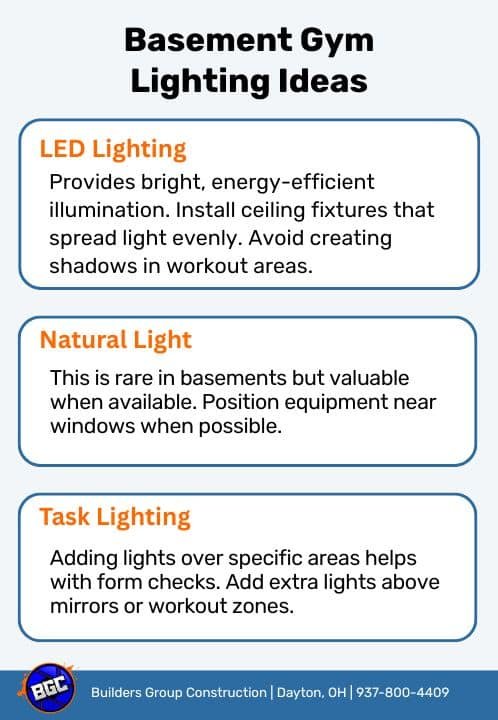
LED Lighting: Provides bright, energy-efficient illumination. Install ceiling fixtures that spread light evenly. Avoid creating shadows in workout areas.
Natural Light: This is rare in basements but valuable when available. Position equipment near windows when possible.
Task Lighting: Adding lights over specific areas helps with form checks. Add extra lights above mirrors or workout zones.
Avoid harsh, flickering fluorescent lights. They cause eye strain and create unflattering reflections in mirrors. Budget $200 to $600 for quality LED fixtures depending on basement size.
Basement Gym Mirrors
Mirrors serve functional and visual purposes.
Form Correction: Watching yourself during exercises helps maintain proper technique, preventing injuries and improving results.
Visual Space Expansion: Mirrors make small basements feel larger by reflecting light and creating depth.
Mounting: Secure mirrors to walls at appropriate heights. Full-length mirrors should reach from near the floor to about six feet high.
Buy gym mirrors designed for fitness spaces. They are made to handle humidity and will not shatter easily. Expect to spend $100 to $300 for quality panels.
Basement Gym Ventilation and Air Quality
Proper air circulation prevents moisture and keeps workouts comfortable, and this is one area where 2026 builds are raising the bar.
Fans: Fans move air and cool you down. Ceiling fans work well for general circulation, while floor fans provide direct cooling during intense workouts.
Dehumidifiers: These control moisture in humid basements, protecting equipment from rust and preventing mold. Run them continuously in damp basements.
Air Purifiers: A compact air purifier clears sweat, dust, and stale air during longer sessions. This is a small upgrade that makes a noticeable difference.
Plants: A few hardy plants like spider plants or peace lilies add oxygen and a bit of life to the room without much upkeep.
Ventilation Systems: These exchange stale air for fresh. If your basement has windows, open them when possible. Consider adding vents or upgrading HVAC to improve air quality.
Moisture Control for Basement Gyms
Humidity damages equipment and creates unhealthy conditions.
Dehumidifiers: These are essential in most Ohio basements. Set them to maintain 30% to 50% humidity. Empty collection buckets regularly or run drain hoses to sump pumps.
Waterproof Flooring: Rubber flooring does not absorb water. Seal concrete floors before installing rubber to prevent moisture transfer.
Insulation: Insulation on walls helps control condensation. Finished basements with proper insulation have fewer moisture issues.
Check for water intrusion regularly and fix any leaks immediately before they damage your gym.
Basement Gym Storage and Organization
Organized gyms function better and feel less cluttered.
Wall Racks: These hold dumbbells, kettlebells, and weight plates vertically to save floor space.
Equipment Shelving: Store resistance bands, yoga mats, and foam rollers on open shelving.
Pegboards: Mount these to walls for hanging jump ropes, belts, and straps.
Storage Bins: Use bins to corral loose items like workout gloves and chalk.
Good organization makes workouts flow smoothly. You spend less time searching for equipment and more time training.
Budget Basement Home Gym Ideas
Great gyms do not require unlimited budgets.
DIY Flooring: Using horse stall mats from farm supply stores can save hundreds, costing about $40 to $60 per mat.
Used Equipment: Buying from local marketplaces or used sporting goods stores can cost 30% to 70% less than buying new.
Simple Setups: One barbell, weight plates, a bench, and a pull-up bar create effective workouts for a lower entry price.
Start with $500 to $1,000 for a functional basic gym and expand as your needs grow.
Basement Gym Renovation Tips
Converting raw basements into gyms requires some upgrades.
Flooring Upgrades: Protect concrete and provide cushioning by installing vapor barriers and rubber flooring.
Lighting Improvements: Add bright LED fixtures throughout and include switches at entry points.
Layout Adjustments: Plan equipment placement around obstacles like support posts that cannot be moved.
Acoustic Upgrades: A few acoustic panels on shared walls keep noise from carrying upstairs, especially with heavier lifting.
Electrical Upgrades: Ensure your circuits can handle the load of treadmills or other powered equipment.
Our room renovation services handle basement conversions from start to finish.
Frequently Asked Questions
How do you build a home gym in a basement?
Plan your layout first, defining strength, cardio, and stretching zones. Install proper flooring like rubber mats, add adequate lighting, and ensure good ventilation.
What flooring is best for a basement home gym?
Rubber flooring is best. It cushions dropped weights, reduces noise, and provides stable footing while resisting moisture.
How much does it cost to build a basement gym?
Basic gyms cost $1,000 to $3,000 including flooring and essential equipment. Mid-range setups run $3,000 to $8,000. Complete gyms with premium equipment, finished walls, and upgraded lighting cost $8,000 to $20,000 or more.
Is it safe to put a gym in a basement?
Yes, basements make excellent gyms with proper setup. Ensure adequate ceiling height for movements, install appropriate flooring, maintain good ventilation, control moisture with dehumidifiers, and secure equipment properly to prevent tipping.
How do you protect a basement floor for gym equipment?
Install rubber flooring over concrete. Use interlocking rubber tiles or rubber mats at least 3/8 inch thick. This protects concrete from dropped weights while cushioning equipment. For very heavy equipment, use thicker mats or multiple layers.
What equipment should be in a home gym?
Essential equipment includes adjustable dumbbells, a bench, and resistance bands. Add a power rack or squat rack for serious strength training. Include one cardio machine like a treadmill, bike, or rower. Expand based on your specific fitness goals.
How do you control moisture in a basement gym?
Run a dehumidifier continuously to maintain 30 to 50% humidity. Use waterproof flooring materials. Ensure proper drainage around your home’s foundation. Fix any water leaks immediately. Improve ventilation with fans or upgraded HVAC.
What ceiling height is needed for a home gym?
Minimum ceiling height of 8 feet works for most exercises. Nine feet is better for overhead movements and taller individuals. Measure your basement’s ceiling height and account for any ductwork or beams that reduce clearance.
What home gym trends matter most in 2026?
Acoustic panels, better air quality with purifiers and plants, and multi-functional strength equipment are shaping the newest basement builds. Clear zoning still matters more than square footage.
Build Your Dream Basement Gym
A basement home gym provides convenient, private fitness access that saves time and money long-term. With proper planning, even small basements transform into functional workout spaces built around today’s trends.
Builders Group Construction helps Dayton homeowners maximize basement potential through quality renovations. We are fully insured, IBC-compliant, and backed by three Angi Super Service Awards.
Our veteran-led team handles basement projects from basic finishing to complete transformations. You will not just talk to a salesperson. You will meet the team actually building your space.
Ready to create your basement gym? Call us at 937-800-4409 or schedule your free consultation today. Let’s build the workout space you deserve.