Commercial interior renovation does more than update how a space looks. It changes how businesses work, how employees perform, and how customers feel about your brand. Whether you need to update an old office, redesign a retail store, or upgrade apartment buildings, knowing the process helps you succeed.
For business owners in Dayton, Ohio and nearby cities, a good commercial renovation improves function, raises property value, and creates spaces that work for today’s needs. This guide covers everything from planning to finish.
What is Commercial Interior Renovation?
Commercial interior renovation means updating or improving the inside of buildings used for business. Unlike home projects, commercial work must balance looks with rules, efficiency, and the needs of workers, customers, property managers, and tenants.
Benefits for Businesses & Tenants
Quality renovation delivers real returns in many ways.
Better function tops the list. Renovation makes the best use of space, improves workflow, and adapts to changing business needs. An old office that blocks teamwork can become a dynamic workspace that sparks ideas.
Property value goes up. Quality upgrades make commercial properties more attractive to tenants or buyers. Energy-efficient improvements and modern features appeal to today’s businesses.
Workers benefit too. Comfortable, well-designed spaces improve morale, productivity, and retention. Natural light, smart layouts, and updated facilities create places where teams do their best work.
Common Project Types
- Office Spaces
- Retail Stores
- Hospitality
- Apartment Buildings:
- Healthcare
Renovation vs. Remodeling: What’s the Difference?
Knowing the difference between Renovation vs. Remodeling, helps you set the right expectations, budget correctly, and talk clearly with contractors and designers.
Renovation Explained
Renovation fixes, updates, or repairs what already exists without changing the basic structure or purpose. These projects work within the current framework to improve condition and looks while keeping the original layout.
Renovation typically means cosmetic improvements like fresh paint, new floors, updated lights, or modern furniture. Systems like HVAC, plumbing, and electrical may get repaired or upgraded without being moved. The goal is to make things better, not transform them.
Remodeling Explained
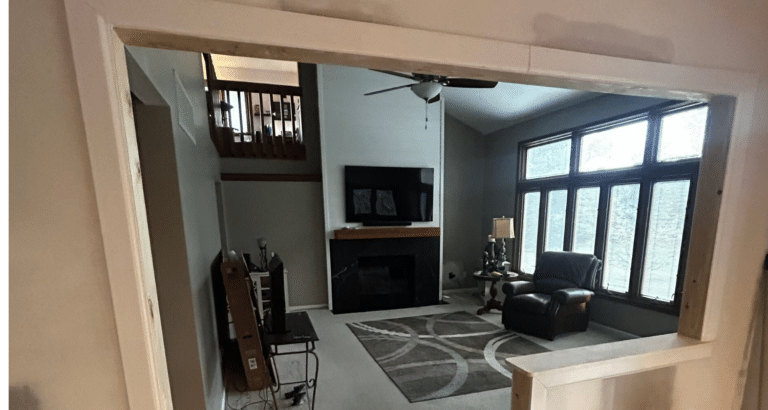
Remodeling makes bigger changes that alter the basic structure, layout, or purpose. These projects may include removing or adding walls, changing the floor plan, moving plumbing or electrical, or converting spaces to new uses.
Remodeling projects often need permits, engineering reviews, and more construction work. They create new setups that didn’t exist before. For example, turning a traditional office with separate rooms into an open workspace represents remodeling, not simple renovation.
Real Examples
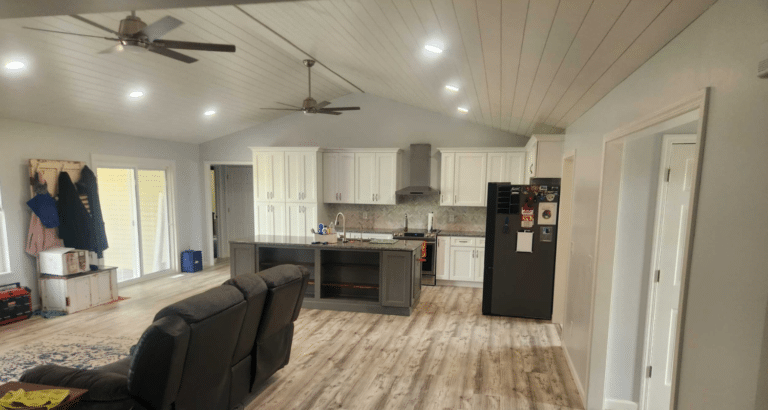
Renovation: A retail store gets new floors, fresh paint, LED lighting, and modern fixtures. The layout stays the same, but the space feels current and inviting.
Remodeling: An office removes interior walls to create open space, moves the break room, adds a conference center, and installs new HVAC zones. This project changes how the space is organized and used.
When to Choose Each
Choose renovation when your space works well but looks dated, when budget limits major construction, or when you need minimal business disruption. Renovation makes sense for cosmetic updates, equipment fixes, and keeping layouts that work.
Pick remodeling when your business has outgrown its layout, when the space no longer serves its purpose, or when you’re changing your business direction. Remodeling fits when you need to support new work styles, expand significantly, or completely rethink how your space supports business.
Planning Your Commercial Renovation
Good planning prevents costly mistakes and makes sure the result matches business goals.
Define Space Needs & Goals
Start by clearly stating what you want to achieve. Are you expanding for growth? Updating old looks? Improving efficiency? Making customer experience better? Each goal affects your renovation strategy differently.
Look closely at your current space. Find what works and should stay, what needs improvement, and what causes problems. Get input from employees and customers who use the space daily. They often spot issues management misses.
Work with Designers & Contractors
Bringing in qualified pros early provides valuable guidance. Experienced commercial interior designers know how design choices affect business operations and long-term function. They can turn your vision into practical solutions while spotting potential problems.
During first meetings, share your goals, budget limits, timeline hopes, and any constraints like lease rules or operational needs. Bring photos and examples of spaces you like.
The 30% Remodeling Rule
This rule serves as an important guide in commercial space remodeling, especially for permits and rules. When renovation costs exceed 30% of property value, projects may need extra requirements.
Hitting this limit often means updating the whole property to current building codes, even parts not in your renovation. This could include updating fire safety, improving accessibility, or upgrading electrical panels.
Knowing this rule helps avoid surprises during permitting. If your planned renovation nears or exceeds 30% of property value, work with your contractor and local building officials early. Budget for these possible extra costs.
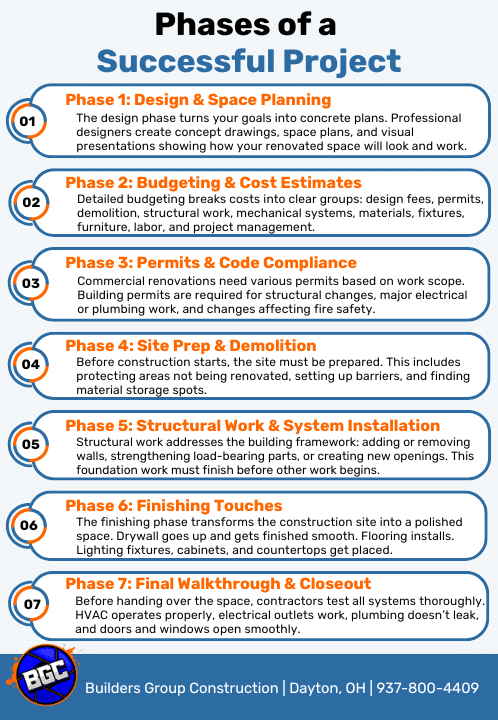
Phases of a Successful Project
Commercial renovations follow a structured process with clear phases.
Phase 1: Design & Space Planning
The design phase turns your goals into concrete plans. Professional designers create concept drawings, space plans, and visual presentations showing how your renovated space will look and work.
Phase 2: Budgeting & Cost Estimates
Detailed budgeting breaks costs into clear groups: design fees, permits, demolition, structural work, mechanical systems, materials, fixtures, furniture, labor, and project management.
Phase 3: Permits & Code Compliance
Commercial renovations need various permits based on work scope. Building permits are required for structural changes, major electrical or plumbing work, and changes affecting fire safety.
Phase 4: Site Prep & Demolition
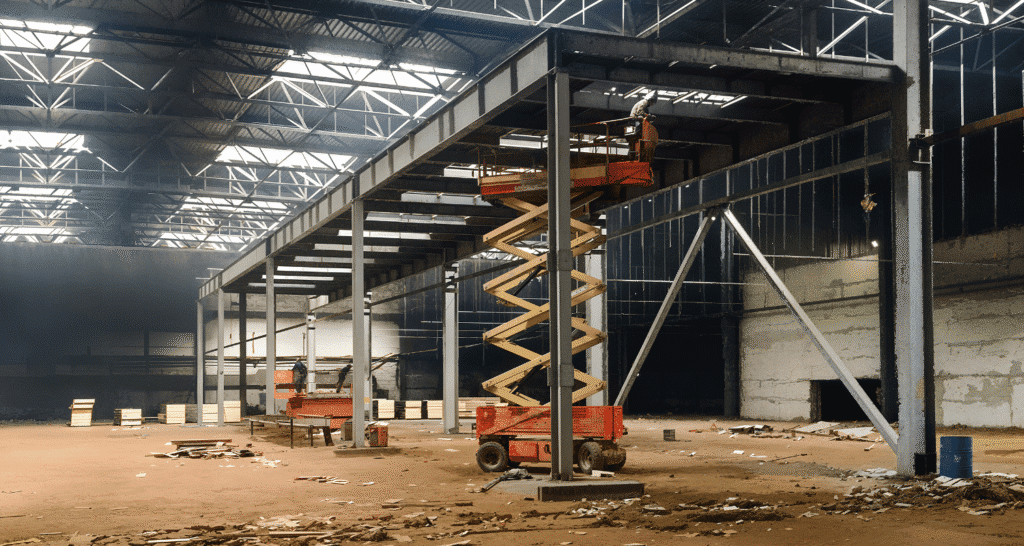
Before construction starts, the site must be prepared. This includes protecting areas not being renovated, setting up barriers, and finding material storage spots.
Phase 5: Structural Work & System Installation
Structural work addresses the building framework: adding or removing walls, strengthening load-bearing parts, or creating new openings. This foundation work must finish before other work begins.
Phase 6: Finishing Touches
The finishing phase transforms the construction site into a polished space. Drywall goes up and gets finished smooth. Flooring installs. Lighting fixtures, cabinets, and countertops get placed.
Phase 7: Final Walkthrough & Closeout
Before handing over the space, contractors test all systems thoroughly. HVAC operates properly, electrical outlets work, plumbing doesn’t leak, and doors and windows open smoothly.
Key Renovation Considerations
Several critical factors affect renovation success beyond following the phased process.
Timeline Management
Realistic timeline planning prevents frustration and business disruption. Renovation length varies greatly based on project scope, space size, and complexity.
Material Quality
Material choice balances toughness, looks, and budget. Commercial spaces take more wear than homes, making durability key in high-traffic areas.
Energy Efficiency & Sustainability
Modern commercial renovations increasingly focus on sustainability. Efficient systems cut operating costs while reducing environmental impact.
Accessibility Standards
Commercial properties must follow accessibility requirements so people with disabilities can access and use facilities. The Americans with Disabilities Act sets minimum standards for entrance accessibility, doorway widths, restroom facilities, and parking.
Working in Occupied Buildings
Renovating while keeping business open needs careful planning. Set up clear communication with employees and customers about construction schedules, access limits, and temporary problems.
Multi-Family & Mixed-Use Buildings
Apartment buildings and mixed-use properties need specialized approaches.
Unit & Amenity Upgrades
Individual apartments benefit from renovations that update kitchens and bathrooms, improve storage, boost energy efficiency, and refresh finishes. These upgrades increase rental income and tenant satisfaction.
Common amenities like fitness centers, lounges, and outdoor spaces greatly influence tenant choices. Upgrading these areas creates competitive advantages. Modern features like package lockers and co-working spaces appeal to current renters.
Common Area Efficiency
Lobbies, hallways, and laundry facilities get heavy use and need tough materials that look good despite constant traffic. These spaces also offer branding opportunities, creating positive first impressions that influence leasing decisions.
Tenant Experience Benefits
Quality renovations directly affect tenant satisfaction and retention. Modern, well-kept properties get higher rents and lower vacancy rates. Happy tenants renew leases, reducing turnover costs.
Coordinate renovations thoughtfully to reduce tenant disruption. Advance notice, clear communication about schedules, and addressing concerns quickly maintain positive relationships during construction.
Common Mistakes to Avoid
Learning from common errors helps your renovation go smoothly.
- Underestimating Time or Budget
- Ignoring Permit Requirements
- Choosing Style over Function
- Poor Communication
Budget Framework
Understanding typical budget allocation helps set realistic expectations. While costs vary by location and scope, commercial renovations generally split costs this way:
Design & Professional Fees (10 to 15%): Architecture, interior design, engineering, project management
Permits & Inspections (2 to 5%): Building permits, plan reviews, inspection costs
Demolition & Site Prep (5 to 10%): Removing existing materials, protecting areas, debris disposal
Structural & Systems (30 to 40%): Framing, HVAC, electrical, plumbing, fire protection
Finishes & Materials (20 to 30%): Flooring, walls, ceilings, cabinets, countertops, paint
Fixtures & Equipment (10 to 15%): Lighting, plumbing fixtures, appliances
Furniture & Accessories (5 to 10%): Desks, seating, decorations, window treatments
Contingency (10 to 20%): Reserve for unexpected issues or changes
Final Thoughts
Commercial interior renovation offers a powerful tool for businesses seeking to improve operations and increase property values. Success needs careful planning, qualified professionals, realistic budgeting, and attention to both looks and function.
Frequently Asked Questions
What is included in a commercial interior renovation?
Commercial interior renovation covers improvements from cosmetic updates like paint and flooring to substantial changes including layout changes, system upgrades, and accessibility improvements. Projects typically include space planning, design services, demolition, construction, finishing work, and installation of fixtures and furnishings.
How much does a commercial interior renovation cost?
Costs vary greatly based on space size, scope, materials, and location. Basic cosmetic renovations might range from $25 to $50 per square foot, while full renovations with structural changes and high-end finishes can exceed $150 to $200 per square foot. Get detailed estimates from qualified contractors for accurate budgeting.
What is the 30% remodeling rule?
The 30% rule suggests that when renovation costs exceed 30% of property value, projects may need to bring the entire building up to current codes. This can significantly affect project scope and budget, making early talks with building officials important for major renovations.
How long does a commercial interior renovation take?
Timeline depends on project scope. Minor cosmetic updates might finish in 2 to 4 weeks, while full renovations needing permits, structural work, and system upgrades typically take 3 to 6 months or longer. Permitting alone can require several weeks to months before construction begins.
What are the most common mistakes in commercial renovations?
Common mistakes include poor planning, unrealistic budgets, choosing contractors based only on price, ignoring permit needs, bad communication, picking style over function, and failing to plan for business continuity during construction. Working with experienced professionals helps avoid these problems.
What permits are required for commercial remodeling?
Required permits vary by location and scope but typically include building permits for structural changes, electrical permits for new circuits, plumbing permits for fixture additions, mechanical permits for HVAC work, and potentially signage or occupancy permits. Your contractor should identify and get all needed permits.
Ready to Transform Your Commercial Space?
At Builders Group Construction, we bring 75+ years of combined experience to commercial renovations throughout Dayton, Ohio and surrounding communities. Our veteran-led team specializes in creating functional, attractive spaces that support your business goals from initial design through final completion.
We don’t just build. We craft spaces that work. Contact us today for a free consultation.
Call: 937-800-4409
Email: Info@bgcnow.us
Visit: bgcnow.us