Home remodeling has become more than just updating worn surfaces. Americans spent over $603 billion on home renovations in 2024, and the trend shows no signs of slowing. As we move through 2025 and into 2026, homeowners are making smarter, more intentional choices about their spaces.
The shift is clear. Gone are the days of all-white minimalism and cold, sterile interiors. Today’s homeowners want warmth, personality, and spaces that actually work for their lives. They’re investing in renovations that feel good, function better, and hold up over time.
What’s driving this change? Several factors are at play. Nearly 48% of owner-occupied homes were built before 1980, meaning many properties need updates. Rising utility costs are pushing people toward energy-efficient upgrades. And with moving becoming less affordable, more families are choosing to improve their current homes rather than relocate.
Top Remodeling Trends for 2026
1. Warm Colors, Textures, and Personalization
The era of stark white walls and gray everything is over. Homeowners are bringing warmth and character back into their spaces with bold, earthy color schemes.
Think tobacco brown, deep greens, rich teals, and jewel tones. These colors create mood and personality in ways that bland neutrals never could. Natural earth tones are leading the way because they make spaces feel grounded and comfortable.
Texture plays a major role as well. Fluted wood panels, woven cabinetry, and layered materials add visual interest without overwhelming a room. These tactile elements make spaces feel intentional and crafted rather than generic.
Art Deco details are making a comeback with a modern twist. Expect chevrons, curves, and geometric patterns paired with brass fixtures and marble accents. Balance is key. Using monochrome or earthy hues keeps New Deco from feeling too busy.
2. Biophilic Design and Natural Materials
Natural materials are taking center stage in home design. After years of pale oak and bleached finishes, dark woods like walnut, mahogany, and chocolate tones are making a strong return.
These heritage colors add instant depth and sophistication. They work especially well in doors, flooring, beams, and cabinetry. When balanced with lighter elements, dark wood creates contrast that feels both classic and contemporary.
Stone, leather, clay, and other natural finishes pair seamlessly with wood. These materials bring the outdoors in and create a calming connection to nature. The result is a look that feels authentic, warm, and timeless.
3. Functional and Flexible Living Spaces
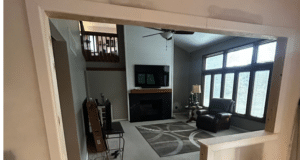
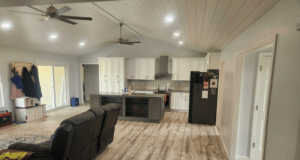
Open concept is fading. Homeowners are moving away from wide-open layouts and toward defined spaces that still feel connected.
Multi-use rooms are becoming the solution. A single space may serve as a home office during the day, a workout area in the morning, and a guest room on weekends. The goal is flexibility without sacrificing comfort or function.
Hidden features and smart storage make this possible. Pull-out desks, Murphy beds, sliding barn doors, and built-in niches allow spaces to shift easily. These features support changing needs without requiring major construction.
4. Spa-Like Bathrooms and Wellness Spaces
Home wellness has moved from a luxury to a priority. Bathrooms are becoming personal retreats with features once limited to high-end spas.
Steam showers, soaking tubs, and heated floors turn everyday bathrooms into calming sanctuaries. Many homeowners are also adding saunas, cold plunge tubs, and dedicated meditation spaces. The focus is on supporting both physical and mental health.
Research supports this shift. Sauna use, cold therapy, and mindfulness practices show measurable benefits. As awareness grows, wellness-focused spaces are becoming a long-term investment rather than a trend.
5. Elevated Kitchens and Niche Features
Kitchens remain the heart of the home, but the focus has shifted toward personalization and lifestyle-driven design.
Custom coffee and tea stations are gaining popularity. Built-in setups keep counters clear and routines efficient. These dedicated zones make mornings smoother and kitchens more organized.
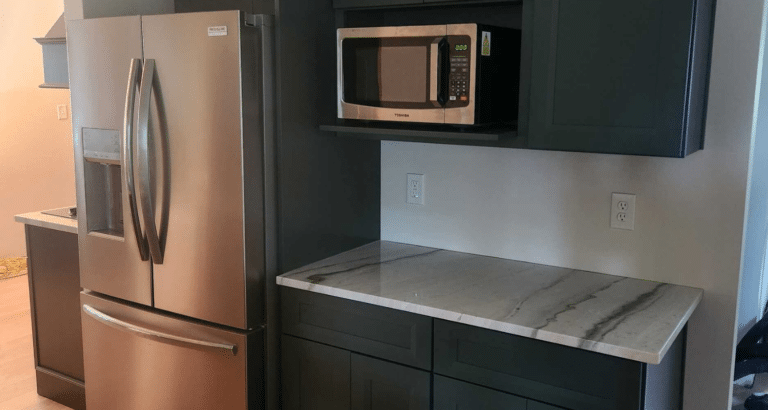
Countertop preferences are changing as well. Light quartz is replacing dark granite. Lighter surfaces brighten kitchens and feel more current. Quartz also offers practical benefits since it is non-porous, durable, and low maintenance.
Outdoor kitchens are becoming more advanced. What started as a grill and counter has evolved into fully equipped spaces with sinks, refrigerators, pizza ovens, and bar seating. These kitchens expand living space and increase property value.
6. Smart Home Technology and Automation
Smart home technology is no longer optional. It has become a baseline expectation for modern homes.
Integrated systems for lighting, temperature, and security provide convenience and energy savings. Homeowners can manage everything from their phone whether they are home or away. Voice controls make everyday adjustments simple.
The most effective systems work across platforms. Homeowners prefer a single interface instead of multiple apps for lighting, climate, and security. Seamless integration is now the standard.
Smart technology also adds real value. Energy monitoring helps reduce utility costs. Smart thermostats learn schedules and adjust automatically. Security systems provide peace of mind and may lower insurance costs.
7. Sustainability and Energy Efficiency
With rising utility costs and growing environmental awareness, sustainable remodeling continues to gain momentum. Recent data shows that 19% of homeowners list energy efficiency as their top renovation motivation.
Energy-efficient windows and proper insulation deliver the biggest impact. These upgrades reduce heating and cooling costs year-round. While upfront costs can be higher, long-term savings add up through lower monthly bills.
Solar-ready roofs and solar panels are becoming more common. State and federal incentives have made solar more accessible. Even homeowners not ready to install panels are preparing for future use.
Eco-friendly materials also matter. Recycled or sustainably sourced products, low-VOC paints, and energy-efficient appliances contribute to healthier and more sustainable homes.
8. Closed Cabinetry and Elevated Storage
Open shelving has lost momentum as homeowners prioritize function over appearance. Closed cabinetry is returning as the preferred choice.
Open shelving requires constant organization. Dishes and glassware must stay perfectly arranged. Dust builds up quickly. Storage space is limited. For many homeowners, the effort outweighs the aesthetic.
Closed cabinets eliminate these issues. They conceal clutter, increase storage capacity, and reduce maintenance. Modern cabinetry designs are visually appealing enough to act as design features.
Storage improvements extend beyond kitchens. Elevated closets throughout the home are becoming standard. Custom organizers, proper lighting, and quality finishes make daily routines more efficient.
9. Outdoor Living and Zoned Outdoor Rooms
Outdoor areas are becoming true extensions of the home, designed with specific zones for different activities.
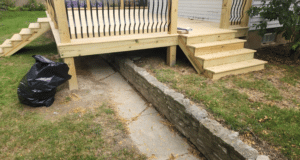
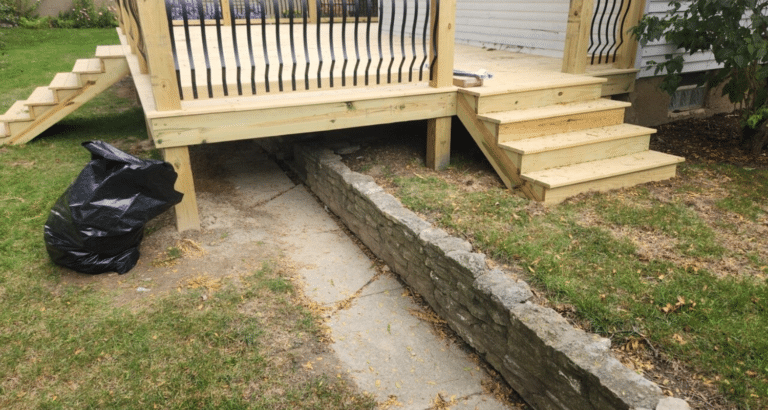
Instead of one open yard, homeowners are creating defined spaces for dining, relaxing, gardening, and play. Planters, low hedges, pathways, and trellises provide separation without rigid boundaries. This approach makes outdoor spaces feel larger and more intentional.
Outdoor kitchens remain a top priority. A functional setup includes prep space, cooking equipment, storage, and seating. These kitchens encourage everyday use, not just special occasions.
Entertainment zones with comfortable seating, fire pits, and lighting create inviting gathering areas. These spaces extend usable square footage and allow homeowners to enjoy their property for more months of the year.

What’s Changing or Fading
Understanding which trends are fading helps homeowners avoid design choices that will feel dated too quickly.
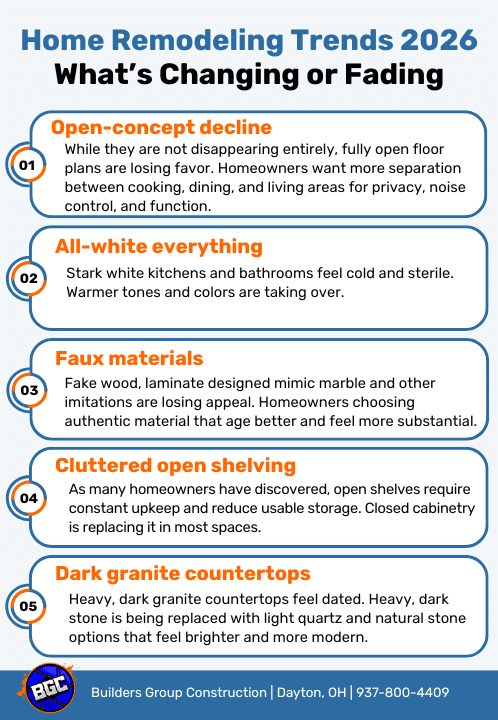
Open-concept decline: While they are not disappearing entirely, fully open floor plans are losing favor. Homeowners want more separation between cooking, dining, and living areas for privacy, noise control, and function.
All-white everything: Stark white kitchens and bathrooms feel cold and sterile. Warmer tones and colors are taking over.
Faux materials: Fake wood, laminate designed to mimic marble, and other imitations are losing appeal. Homeowners are choosing authentic materials that age better and feel more substantial.
Cluttered open shelving: As many homeowners have discovered, open shelves require constant upkeep and reduce usable storage. Closed cabinetry is replacing it in most spaces.
Dark granite countertops: Heavy, dark granite countertops feel dated. Heavy, dark stone is being replaced with light quartz and natural stone options that feel brighter and more modern.
Knowing which trends are fading makes it easier to choose updates that will still look good years from now.
Emerging Practical Remodeling Drivers
A. Practical Needs and ROI
The primary reason homeowners remodel is practical need. Worn surfaces, outdated systems, and aging appliances often trigger renovation decisions.
Industry reports show that 27% of homeowners renovate to upgrade worn finishes. Another 19% focus on energy efficiency. An additional 18% remodel to prepare a home for resale.
These motivations push homeowners to think carefully about return on investment. They want upgrades that improve daily life while also adding resale value. The most successful remodels achieve both.
Kitchen remodels and bathroom remodels typically return 60-80% of their cost at resale. Energy-efficient upgrades pay back through reduced utility bills. Outdoor living spaces and smart home features also contribute to increased home value.
Focus on ROI: When planning a remodel, research which upgrades add the most value in your local market. Prioritize projects that solve real problems in your home. Balance personal preferences with broad appeal to protect your investment.
B. Financing and Project Planning
How people pay for remodels is shaping what gets done. In 2025, 54% of homeowners used home equity loans or lines of credit. Another 29% used savings. The rest relied on credit cards, alternative lenders, or point-of-sale financing.
With interest rates fluctuating, financing choices matter more than ever. Monthly payment options make larger projects more accessible. Point-of-sale financing removes barriers and allows homeowners to move forward sooner.
Smart planning goes beyond the project price. Homeowners should consider financing costs, project timelines, and daily disruption during construction. A clear budget and realistic schedule reduce stress throughout the process.
Financing tips: Compare multiple lenders to find the best rates. Look at the total cost including interest, not just monthly payments. Check for manufacturer rebates or utility incentives that reduce out-of-pocket costs. Detailed planning helps prevent budget overruns.
Frequently Asked Questions
What are the top home remodeling trends for 2026?
The leading trends include warm colors and textures, natural materials like dark wood and stone, spa-like bathrooms, smart home technology, energy-efficient upgrades, and zoned outdoor living spaces. Functionality and personalization guide most remodeling decisions.
What adds the most value to a home renovation?
Kitchen and bathroom remodels typically offer the strongest return, recovering 60-80% of their cost at resale. Energy-efficient windows, roofing upgrades, and smart home features also add value. Projects that improve both function and appearance tend to perform best.
Should I focus on function or style first when remodeling?
Function should come first. Start by understanding how the space is used daily. Design choices should support those needs while reflecting your personal taste. The most successful remodels balance practicality with visual appeal.
Are smart home upgrades worth the investment?
Yes. Smart home upgrades offer immediate benefits like convenience and energy savings. They also increase resale appeal since many buyers expect these features. Starting with smart thermostats and lighting provides strong value before expanding further.
What are the best energy-efficient remodeling ideas?
Replacing old windows, improving insulation, installing smart thermostats, upgrading to LED lighting, and preparing for or installing solar panels all reduce utility costs. Many of these upgrades may qualify for rebates or tax credits.
How can I make small spaces feel larger with remodeling?
Use light wall and ceiling colors, maximize natural light with larger windows or skylights, and choose built-in storage solutions. Mirrors and vertical storage also help expand visual space while keeping floors clear.
What are the most popular kitchen trends right now?
Light quartz countertops, closed cabinetry, custom coffee stations, and textured wood finishes are leading kitchen trends. Homeowners prioritize layouts and features that support daily use over purely decorative elements.
Are outdoor living spaces still a remodeling priority?
Yes. Outdoor kitchens, defined zones for dining and relaxing, and comfortable entertainment areas remain top priorities. These spaces increase usable square footage and enhance property value.
What design styles are fading in 2026?
All-white minimalism, open shelving, dark granite countertops, fully open floor plans, and faux materials are declining. Homeowners are moving toward warmer, more personal spaces with authentic materials.
How do I choose materials that age well with my home?
Natural materials like solid wood, stone, and quality tile age best. Choose warm neutrals for permanent features and use accessories for trends. Durable materials maintain value longer and reduce replacement costs.
Which remodeling trends add the best resale value?
Energy-efficient upgrades, updated kitchens and bathrooms, smart home features, and outdoor living spaces provide strong resale returns. Neutral finishes with broad appeal tend to perform best.
What are some budget-friendly renovation ideas?
Painting with warm modern colors, replacing hardware and light fixtures, adding tile backsplashes, upgrading shower fixtures, installing smart lighting, and refreshing outdoor seating all deliver impact without major construction.
Is open shelving out of style now?
Open shelving is declining due to maintenance demands and reduced storage. Most homeowners prefer closed cabinetry for everyday use, reserving open shelves for limited display areas.
How can I blend traditional and modern design trends?
Use classic architectural elements like trim or paneling with updated colors. Pair traditional furniture shapes with modern fabrics. Balance one dominant style with subtle elements of the other.
What are wellness room trends for home renovation?
Home spas with steam showers, soaking tubs, and heated floors are popular. Saunas and cold plunge tubs add therapeutic benefits. Meditation spaces with natural materials and soft lighting support mental health.
Conclusion
Home remodeling trends for 2026 show a clear shift toward comfort, authenticity, and long-term value. Homeowners are moving away from short-lived trends and choosing upgrades that improve how their homes feel and function.
The common theme across these trends is intentional design. Whether incorporating smart technology, creating wellness spaces, or using natural materials, successful remodels serve real purposes. They make homes more comfortable, efficient, and enjoyable.
The best approach is selecting trends that fit your lifestyle and budget. Not every trend works for every home. Focus on improvements that solve specific challenges while adding lasting value.
Thinking long-term pays off. Quality materials, thoughtful layouts, and practical upgrades stand the test of time. The trends that last are rooted in how people truly live.
Start Your Remodeling Project with Builders Group Construction
At Builders Group Construction, we bring 75+ years of combined experience to every project in Dayton and surrounding Ohio communities. Our team understands how to apply these emerging trends in ways that align with your lifestyle, goals, and budget.
We do not simply follow trends. We help you choose upgrades that make sense for your home. From smart bathrooms and smart home integration to energy-efficient windows and custom outdoor living spaces, we manage every detail with care and precision.
Our proven 12-step process ensures clarity from consultation through final walkthrough. You work directly with the craftsmen building your project, including our Army veteran project manager Justin Vaughn and our team of licensed and insured professionals.
Ready to get started?
Call us at 937-800-4409 or visit bgcnow.us to schedule your free consultation. Let’s talk about how these 2026 trends can transform your Dayton-area home into a space that truly works for you.
Experience. Quality. Reliability. That’s the Builders Group Construction difference.