Budgeting for a ground up commercial project takes more than multiplying square footage by an average construction cost. That single number gets people started, but it rarely matches what a project actually costs once land, site conditions, design requirements, permits, and contingency all get added in.
The final budget can be affected by building type and size, land and site conditions, design and engineering requirements, labor and material costs, permits and utility connections, building specifications, the project schedule, and contingency for unforeseen conditions. This guide walks through how to build a defensible total project budget rather than leaning on a single cost per square foot figure.
Builders Group Construction works with commercial property owners and investors through this exact budgeting process, from early feasibility numbers through a full contractor ready estimate.
What Does a Ground Up Commercial Build Budget Include?
There is an important difference between the total project budget and the construction only budget. The basic framework:
Land Acquisition + Pre Construction Costs + Hard Construction Costs + Project Costs + Closeout Costs + Contingency = Total Project Budget
This includes land acquisition, surveys and environmental studies, architecture and engineering, permits and fees, site development, construction itself, insurance and bonds, financing or project administration where applicable, closeout, and contingency. Skipping any one of these categories is one of the most common reasons commercial construction budgets fall short partway through a project.
Phase 1: Pre Construction Costs
Land Acquisition and Due Diligence
This covers the property purchase itself, land surveys, environmental assessment, geotechnical investigation, soil conditions, demolition requirements if an existing structure is on the site, and confirming utility availability before committing to a site.
Design and Engineering
Design professionals such as a structural engineer, civil engineer, and interior designer, along with the building’s lead designer, typically contribute to construction documents and building specifications during this phase. More detailed plans generally allow for more accurate estimating later, so investing in design early tends to pay off in fewer surprises during construction.
Permits and Regulatory Costs
Zoning approvals, building permits, utility connection fees, impact fees, and other local regulatory requirements fall into this category. These costs and timelines vary significantly by jurisdiction, so local research matters more here than almost anywhere else in the budget.
Phase 2: Construction Hard Costs
Hard costs are the physical construction expenses, and this phase is where a project shifts from planning into the kind of work covered under commercial space remodeling or, for a business building its own standalone location, a full business space remodeling scope.
Sitework
Clearing, demolition, excavation, grading, drainage, erosion control, and utility infrastructure all fall under sitework, and this category can swing significantly based on soil conditions and site topography.
Structure and Building Envelope
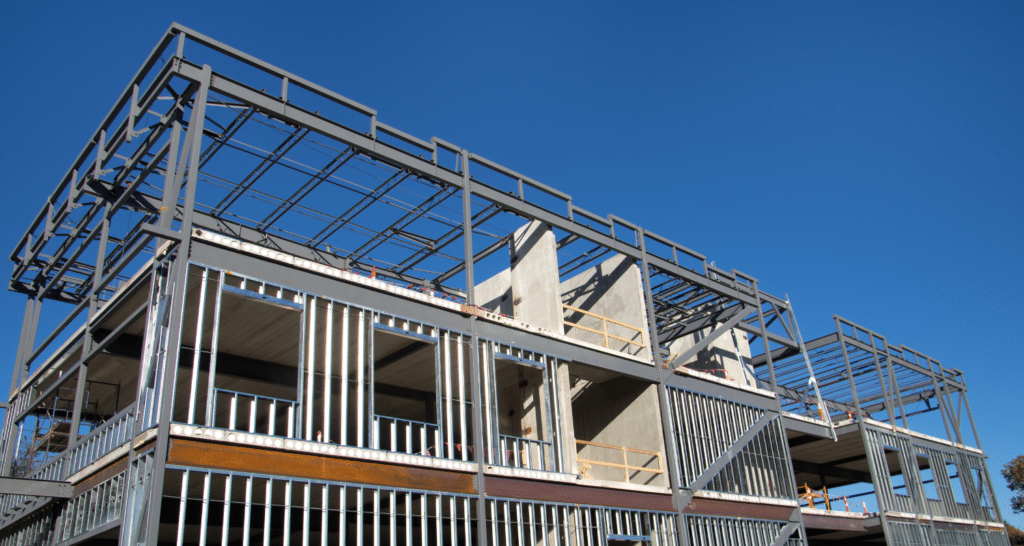
Foundation, structural framing, exterior walls, roofing, and windows and doors make up the building’s shell.
MEP and Building Systems
Plumbing, electrical, HVAC, fire suppression, and life safety systems fall under mechanical, electrical, and plumbing, commonly shortened to MEP.
Interior Construction
Drywall, flooring, ceilings, fixtures, and interior finishes complete the building’s interior.
Phase 3: Post Construction and Closeout Costs
Bringing a building from completed construction to occupancy involves commissioning, final inspections, testing, cleaning, punch list work, meeting occupancy requirements, and final documentation. Insurance, bonds, administration, and similar project costs may also need to be budgeted separately depending on how the project is structured.
Hard Costs vs. Soft Costs in Commercial Construction
Hard costs are the physical work and materials used to construct the building, including foundation, framing, roofing, HVAC, plumbing, electrical, drywall, and finishes.
Soft costs are the professional, regulatory, administrative, and other non construction expenses, including architecture, engineering, surveys, environmental studies, permits, professional fees, project administration, and certain insurance or bond costs.
One important clarification: contingency is a risk allowance, not simply another soft cost. It exists to absorb the unknown, not to fund a known category of the project.
How Much Contingency Should You Budget?
A commonly used planning guideline is a 5 to 10 percent contingency reserve, though the appropriate amount depends on project stage, how complete the design is, site uncertainty, and how the contract is structured.
The basic formula: Contingency = Contingency Rate × Contingency Base
Defining the base matters before applying a percentage, since 10 percent of hard costs alone is a very different number than 10 percent of the total project budget. Risks worth planning for include unknown soil conditions, scope changes, change orders, material price changes, supply delays, weather, and incomplete design information at the time the budget was set.
How to Estimate Commercial Construction Cost per Square Foot
The starting formula: Estimated Construction Cost = Building Size × Benchmark Cost per SF
This is only a starting point. A more complete view looks like this:
Benchmark $/SF + Project Scope + Site Costs + Local Conditions + Soft Costs + Contingency = More Complete Project Budget
Two buildings with the same square footage can end up with very different total costs based on site conditions, finish level, building systems complexity, and local labor and material pricing.
What Factors Affect a Ground Up Commercial Construction Budget?
Building type, location, square footage, site conditions, soil, building design, material selection, quality of finishes, labor market conditions, material prices, utility infrastructure, code requirements, permitting, schedule, project complexity, and scope changes all affect the final number. A single national dollar per square foot figure should never be treated as universally applicable to a specific project or market.
How to Build a Commercial Construction Budget Step by Step
Define the building type and intended use. Establish the required square footage. Evaluate the site. Identify land and due diligence costs. Develop preliminary plans. Obtain architecture and engineering estimates. Identify permits and regulatory fees. Develop hard cost estimates. Add soft and project costs. Add appropriate contingency. Review exclusions and allowances carefully. Then update the budget as design details become clearer through each project phase.
Example Ground Up Commercial Construction Budget
The following is a hypothetical example, not an unsupported market average, meant to show how the categories fit together.
| Category | Illustrative Amount |
| Land | $600,000 |
| Design and engineering | $180,000 |
| Permits | $60,000 |
| Sitework | $250,000 |
| Building construction | $2,400,000 |
| MEP | $650,000 |
| Interior finishes | $400,000 |
| Project costs | $150,000 |
| Contingency (8%) | $350,000 |
| Total estimated budget | $5,040,000 |
Every figure here is illustrative and specific to this hypothetical scenario, not a market average to apply directly to a different project.
Preliminary vs. Design Development vs. Pre Construction Estimates
| Budget Stage | Main Purpose |
| Preliminary | Early feasibility |
| Design Development | Refine scope and costs |
| Pre Construction | More detailed contractor ready budget |
Budget accuracy improves as project information becomes more complete. Early estimates contain more assumptions, while later estimates incorporate more detailed plans, quantities, specifications, and site information.
Common Commercial Construction Budgeting Mistakes
Using only a dollar per square foot figure, forgetting soft costs, ignoring site conditions, underestimating permitting and utility costs, and leaving out contingency are among the most common mistakes. Failing to define exclusions clearly, using outdated cost assumptions, not updating the budget as scope changes, treating allowances as fixed prices, and forgetting closeout costs round out the list.
How to Create a More Reliable Ground Up Construction Budget
Define scope early. Investigate the site before finalizing numbers. Get professional design input rather than estimating from a floor plan alone. Use current local cost information rather than national averages. Separate hard and soft costs clearly. Document assumptions as you go. Identify exclusions in writing. Include contingency at every stage. Review the budget at each design stage rather than only once at the start. Compare estimates against the actual project scope as it develops.
For projects that combine ground up construction with tenant specific finish work, this process often connects directly with build outs and additions or a full commercial space upgrade, and larger developments sometimes need the broader coordination covered under commercial property renovation once the base building is complete. Businesses leasing part of the finished space often move next into tenant improvements or office renovations to finish their specific suite, and owners planning a multi location rollout frequently repeat this same budgeting process through corporate remodeling services at each site. Our own luxury home construction cost guide covers a similar budgeting approach for high end residential ground up projects, which follows much of the same logic.
Frequently Asked Questions
How much does it cost to build a commercial building?
It depends heavily on building type, size, location, and finish level, which is why a full budget framework works better than a single national average.
What is the average commercial construction cost per square foot?
This varies widely by building type and market, and should be treated as a starting point rather than a final number for any specific project.
How do you create a commercial construction budget?
By defining scope, evaluating the site, developing hard and soft cost estimates, and adding contingency, then refining the budget as design details become clearer.
What should be included in a commercial construction budget?
Land acquisition, pre construction costs, hard construction costs, project costs, closeout costs, and contingency, following the total project budget framework above.
What are hard costs and soft costs in commercial construction?
Hard costs are physical construction expenses, while soft costs cover architecture, engineering, permits, and other professional and administrative expenses.
How much contingency should I include in a construction budget?
A commonly used planning range is 5 to 10 percent, though the right amount depends on design completeness, site uncertainty, and contract structure.
What factors affect commercial construction costs?
Building type, location, site conditions, design complexity, material and labor costs, code requirements, permitting, and project schedule all play a role.
Is it cheaper to build or buy a commercial building?
It depends on the specific property, market, and project goals, since buying an existing building usually costs less upfront but may require its own renovation work.
How large of a commercial building can be built on one acre?
This depends on local zoning, setback requirements, parking ratios, and building height limits, which vary significantly by jurisdiction.
How accurate is a commercial construction cost per square foot estimate?
Early estimates are rough by nature and improve significantly as design development and pre construction estimating add more project specific detail.