Planning a home renovation brings up tough questions. Should you hire separate designers and contractors? How do you keep everyone aligned? Can you control costs when multiple companies are involved?
A design-build remodeler solves these problems by handling both design and construction under one roof. This approach saves time, reduces stress, and removes the miscommunication that often slows down projects.
This guide explains what design-build remodeling is, how it works, and why it makes sense for most home renovation projects.
What is a Design-Build Remodeler?
A design-build remodeler provides both design and construction services under one contract. One company manages your project from initial planning through final completion.
This differs from traditional remodeling, where you hire a designer or architect separately from your general contractor. With design-build, your designer and builder are on the same team from the start.
The design-build model brings everyone together. Designers, builders, project managers, and trades collaborate from day one to keep your project aligned.
How Design-Build Remodeling Works
The process follows a structured path that overlaps design and construction phases for better efficiency.
Planning Phase
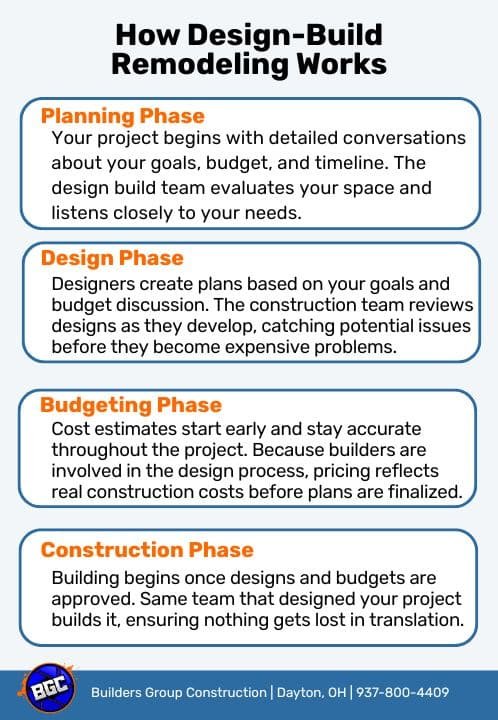
Your project begins with detailed conversations about your goals, budget, and timeline. The design-build team evaluates your space and listens closely to your needs.
During this phase, you define what you want to achieve. The team identifies potential challenges early and recommends solutions that fit your budget.
Design Phase
Designers create plans based on your goals and budget discussions. The construction team reviews designs as they develop, catching potential issues before they become expensive problems.
This overlap between design and construction prevents situations where designers create plans contractors cannot actually build within budget.
Budgeting Phase
Cost estimates start early and stay accurate throughout the project. Because builders are involved in the design process, pricing reflects real construction costs before plans are finalized.
The team can adjust designs to stay within budget without starting over. If you need to reduce costs, they recommend alternatives that maintain your overall vision. Our guide on pros and cons of financing your home construction project covers how to plan your budget before committing to any renovation.
Construction Phase
Building begins once designs and budgets are approved. The same team that designed your project builds it, ensuring nothing gets lost in translation.
Changes happen faster because designers and builders work in the same office. Need to adjust something during construction? The team handles it immediately without waiting for outside approvals.
Key Benefits of Hiring a Design-Build Remodeler
Design-build offers clear advantages over traditional methods where you manage separate companies.
Single Point of Contact
You work with one company throughout your project. No juggling calls between designers, contractors, and subcontractors.
A dedicated project manager stays with you from start to finish. Questions get answered quickly and decisions move forward without delays.
If issues come up, there is no finger-pointing. The design-build team is responsible for the entire project.
Better Budget Control
Early estimates stay accurate because the same team designs and builds your project.
Traditional remodeling often leads to surprise costs when contractors uncover issues in the design. Design-build avoids this by involving builders from the start.
Fewer change orders mean fewer unexpected expenses. Issues are solved during design when they are less costly, not during construction.
Faster Project Completion
Construction can start before every last detail is finalized. While builders work on one area, designers finish plans for the next phase.
This parallel workflow cuts weeks or months from traditional timelines where design must finish completely before construction starts.
No delays from disagreements between separate companies. Everyone works toward the same goal on the same timeline.
Improved Communication
Communication stays clear within one team. Designers and builders work together daily and stay aligned on your project.
You avoid going back and forth between multiple companies. Updates come from one source, and decisions happen faster.
If you want to make changes during construction, the design team is immediately available to adjust plans.
Higher Quality Results
Consistency improves when one team handles both design and construction. Builders understand the intent behind the design because they helped create it.
Execution improves when contractors are not just following instructions. They are building something they were involved in shaping.
Quality remains consistent because one company is responsible for the final result.
Design-Build vs Traditional Remodeling
Understanding the differences helps you choose the right approach for your project.
| Feature | Design-Build | Traditional Method |
| Contracts | One contract | Multiple contracts |
| Communication | Centralized team | Fragmented between companies |
| Cost Control | High predictability | Variable with surprises |
| Timeline | Faster with overlap | Slower, sequential phases |
| Accountability | Single company | Split between multiple parties |
| Design Changes | Quick adjustments | Slow, requires coordination |
| Budget Flexibility | Easy reallocations | Difficult, requires new bids |
Traditional remodeling means you hire a designer or architect first. They create plans. Then you get bids from contractors to build those plans.
This creates problems when bids exceed your budget. Going back to redesign costs time and money. Contractors may suggest cheaper alternatives the designer never considered.
Design-build prevents this by keeping designers and builders in constant contact about your budget throughout planning.
When Should You Hire a Design-Build Remodeler?
Design-build works especially well for certain types of projects.
Complex Renovations
Projects involving multiple rooms or systems benefit most from unified teams. When your kitchen remodeling project connects to living room changes that affect HVAC and electrical throughout your home, coordination matters.
Design-build teams manage this complexity more effectively because everyone understands how each part connects.
Whole Home Remodels
Renovating your entire home requires extensive planning and coordination. Managing multiple contractors separately becomes overwhelming.
A design-build team coordinates everything while you focus on big-picture decisions rather than daily crisis management.
Kitchen and Bathroom Upgrades
Kitchen remodeling and bathroom remodeling involves plumbing, electrical, ventilation, and structural work packed into small spaces.
The tight integration design-build provides prevents conflicts between trades working in confined areas.
Additions and Structural Changes
Home additions require coordinating new construction with existing structure. Matching materials, tying into systems, and maintaining your home’s character demand close collaboration between designers and builders.
Design-build firms excel at blending old and new because the same team handles both aspects. Our home build and addition services are structured specifically for this kind of project.
Potential Drawbacks to Consider
Design-build isn’t perfect for every situation. Understanding limitations helps you make informed choices.
Less Design Independence
Some homeowners prefer to work with an independent architect. Design-build requires using the firm’s design team.
Strong design-build firms still provide collaborative design experiences that match the level of involvement homeowners expect.
Choosing the Right Firm Matters
Not all design-build companies are equal. Some lean heavily toward construction with weak design. Others excel at design but struggle with building.
Research firms carefully. Review portfolios. Talk to past clients. Make sure the company excels at both design and construction. Our guide on red flags to watch for when hiring a contractor in Dayton gives you a checklist of what to look for before signing anything.
May Not Suit Very Small Projects
Simple projects like painting or minor repairs don’t benefit much from design-build integration. The value shows up in projects requiring significant design and construction coordination.
For straightforward work, traditional contractors may cost less and work just fine.
Cost of Hiring a Design-Build Remodeler
Understanding pricing helps you budget realistically.
Upfront Costs
Design-build may appear more expensive upfront because one company handles both design and construction.
In reality, this often costs less than hiring separate professionals once you account for all fees and coordination costs.
Long-Term Savings
Better planning means fewer change orders during construction. Each change order in traditional remodeling adds costs for design revisions, new permits, and construction adjustments.
Design-build reduces these expensive mid-project changes through better upfront coordination.
Faster timelines also save money. Less construction time means lower labor costs and less disruption to your daily life.
Budget Predictability
Fixed-price contracts give you certainty about total costs before work starts. The design-build team provides accurate estimates because builders participate in creating those estimates.
Traditional bidding often brings surprise costs when contractors find issues designers didn’t anticipate. Design-build catches these issues during planning when they’re cheaper to address.
How to Choose the Right Design-Build Firm
Selecting the right company determines your project’s success.
Review Experience
Look for firms with extensive experience in projects similar to yours. A company with a strong track record in room renovation understands space-specific challenges better than generalists.
Ask how long they have operated as a design-build firm. Experience matters when coordinating complex projects.
Examine Portfolios
Review completed projects that match your style and scope. Quality shows in finished work, not just promises.
Visit completed projects if possible. Photos look great, but seeing work in person reveals true quality.
Assess Communication Style
Meet the team before committing. Make sure they listen carefully, explain clearly, and show real interest in your goals.
Strong communication shapes your entire experience, so choose a team you feel comfortable working with. Our guide on what to expect during a Dayton home remodel gives you a clear picture of how a well-run project communicates from start to finish.
Verify Licensing and Certifications
Confirm proper licensing for both design and construction work in your area. Check insurance coverage protects you during the project.
Professional certifications indicate commitment to quality and ongoing education.
Evaluate Pricing Transparency
Good firms provide detailed estimates breaking down costs clearly. Avoid companies that give vague numbers or resist explaining pricing.
Understand what’s included and what might cost extra. Clear contracts prevent disputes later.
At Builders Group Construction, our design-build approach combines 75+ years of experience with transparent pricing and clear communication. Our veteran-led team serves homeowners throughout Dayton, Kettering, and surrounding communities.
Common Mistakes to Avoid
Learning from others’ errors saves you headaches.
Hiring Based on Price Alone
The lowest price can signal risk. It may reflect lower-quality materials, inexperience, or hidden costs that show up later.
Focus on value, not just price. Consider experience, communication, and quality alongside cost.
Not Reviewing Past Projects
Don’t hire based on marketing alone. See actual completed work. Talk to previous clients about their experiences.
Past performance predicts future results better than any sales pitch.
Ignoring Contract Details
Read everything before signing. Understand payment schedules, change order processes, warranty terms, and dispute resolution procedures.
Unclear contracts cause most project conflicts. Insist on clarity upfront.
Skipping Detailed Planning
Rushing into construction without thorough planning creates expensive problems later. Good planning feels slow but saves time overall by preventing mid-project changes. Our guide on the best time to renovate your home covers how to time your project for the smoothest possible process.
Is Design-Build Remodeling Worth It?
For most medium to large renovation projects, yes.
Design-build works best when you want a simpler process, better communication, and clear accountability. The integrated approach reduces stress and improves outcomes.
Projects involving multiple rooms, complex systems, or structural changes benefit most. The coordination design-build provides prevents the miscommunication that derails traditional remodeling.
Small, simple projects may not need this level of integration. But for substantial renovations where design and construction must work together closely, design-build delivers clear advantages.
Frequently Asked Questions
What is a design-build remodeler?
A design-build remodeler is a single company that provides both design and construction services under one contract. Instead of hiring separate designers and contractors, you work with one team that handles your entire project from planning through completion.
Is design-build cheaper than hiring separate contractors?
Design-build often costs less overall despite seeming more expensive upfront. You avoid duplicate fees, reduce change orders through better planning, and complete projects faster. Better coordination prevents expensive mistakes that plague traditional remodeling.
What are the disadvantages of design-build?
You must use the firm’s designers rather than hiring your favorite architect separately. Choosing the right firm matters because quality varies. Very small or simple projects may not benefit enough from integration to justify design-build pricing.
How does design-build save time?
Construction can begin while design details are still being finalized. No delays from disagreements between separate companies. Decisions happen faster because everyone works in the same office. Most design-build projects finish weeks or months faster than traditional remodeling.
Is design-build better for home renovations?
For most medium to large renovations, yes. Projects involving kitchen remodels, bathroom upgrades, whole home renovations, or additions benefit greatly from the coordination design-build provides.
Start Your Design-Build Renovation
Design-build remodeling simplifies renovation by giving you one accountable team from start to finish. Clear communication, faster timelines, and predictable budgets make the process smoother.
At Builders Group Construction, we manage everything from initial concept through final walkthrough. Your vision stays intact without the stress of managing multiple companies.
We serve homeowners throughout Dayton, Beavercreek, Centerville, Springboro, and nearby communities with quality design-build remodeling services.