Planning a commercial construction or renovation project? One of the most important decisions you will make is who manages the work. Many business owners consider handling projects themselves or hiring the cheapest option available. Both choices usually lead to problems that cost more in the long run.
A licensed commercial general contractor brings skill, efficiency, and accountability that protect your investment. They manage every part of construction, from permits to the final inspection. The right contractor saves you time, money, and stress while delivering quality results, which matters even more in 2026 as material costs and labor shortages keep putting pressure on project budgets across the industry.
At Builders Group Construction, we have managed commercial projects across Dayton and surrounding Ohio communities like Hamilton, Brookville, and Centerville for decades. With 75 plus years of combined team experience and three Angi Super Service Awards, we know what separates a successful project from a disaster. Here is why hiring a professional commercial contractor matters, and what has changed in the industry this year.
What Is a Commercial General Contractor?
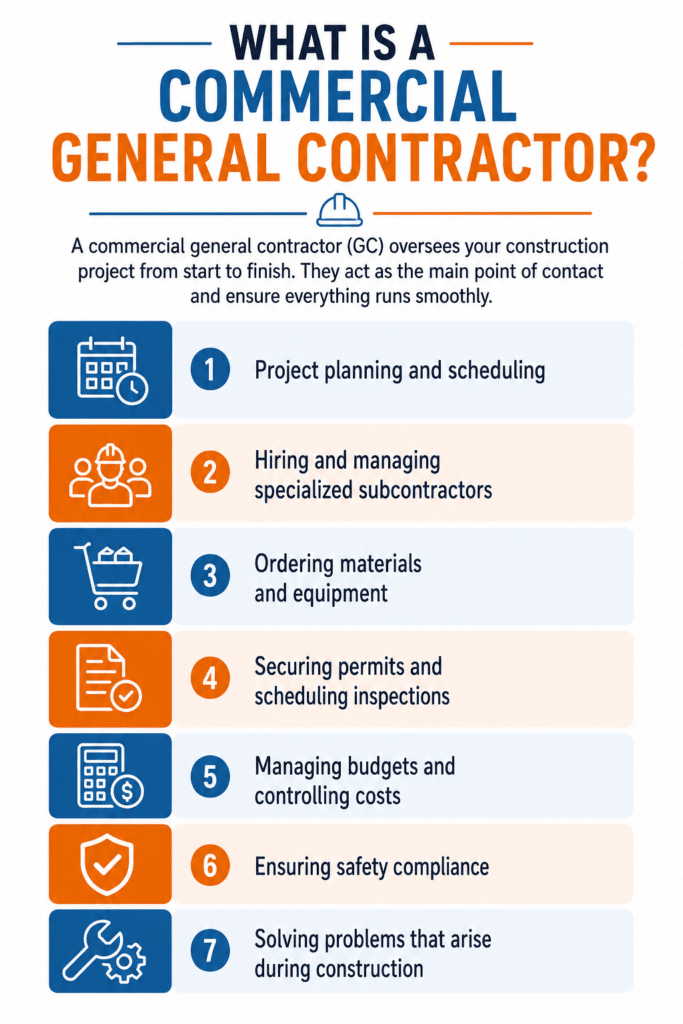
A commercial general contractor oversees construction projects from start to finish. They coordinate all aspects of the work, manage subcontractors, handle permits, and ensure projects meet codes and regulations.
Their responsibilities include:
- Project planning and scheduling
- Hiring and managing specialized subcontractors
- Ordering materials and equipment
- Securing permits and scheduling inspections
- Managing budgets and controlling costs
- Ensuring safety compliance
- Solving problems that arise during construction
General contractors serve as your single point of contact. Instead of dealing with plumbers, electricians, framers, and other trades separately, you work with one person who manages everything.
Traditional contractors handle construction based on plans provided by architects and designers. Design-build contractors offer both design and construction services under one contract. This streamlines communication and often speeds up timelines.
Our design-build remodel approach works for both residential and commercial projects, simplifying the process and reducing coordination headaches.
Expertise and Industry Knowledge
Licensed contractors understand building codes, zoning rules, and compliance requirements. These rules vary by location and project type. Mistakes lead to failed inspections, expensive fixes, and delays.
Commercial contractors stay current with construction methods and materials, which matters more than ever in 2026 as steel and aluminum prices stay high due to tariffs, even while cement and concrete prices hold fairly steady. A contractor who tracks these shifts closely can plan purchases at the right time and protect your budget from sudden price jumps. They also know which sustainable building practices actually lower operating costs instead of just sounding good on paper.
This knowledge prevents costly errors. A contractor who knows local codes gets permits approved faster. One who understands proper waterproofing prevents future damage. Experience matters when problems come up mid project, and knowing which red flags to watch for when hiring a contractor in Dayton can save you from a bad partnership before work even starts.
Efficient Project Management
Commercial construction involves dozens of tasks that must happen in the right order. Concrete must cure before framing begins. Electrical and plumbing rough in work happens before drywall. Coordination keeps a project moving.
Professional contractors build detailed schedules that account for material lead times, subcontractor availability, inspection requirements, and weather delays. Labor remains tight across the industry in 2026, so a contractor with strong crew relationships and steady subcontractor networks can hold a schedule that a less connected team simply cannot.
More contractors are also using digital tools this year, including project tracking software and even early digital twin models for larger jobs, so you can see real progress without constant phone calls. Good contractors communicate ahead of time about schedule changes or problems as they come up rather than after the fact.
Poor project management causes delays that cost time and money. Every extra week means more rent, more storage costs, and delayed revenue. Efficient contractors keep a project on schedule. A business space remodel built with proven systems for tracking progress helps keep every project type on time.
Cost Savings and Budget Optimization
Professional contractors often save more than their fee through better pricing and efficiency. They have relationships with suppliers and subcontractors that get better rates than an individual buyer would get on their own.
Value engineering finds ways to cut costs without cutting quality. An experienced contractor knows where to spend and where to save. They suggest alternatives when a preferred material runs over budget, which matters even more now that material costs are expected to rise another 2 to 4 percent this year.
Preventing construction errors saves real money. Fixing a mistake after the fact costs far more than doing the job right the first time. Typical contractor fees run 10 to 20 percent of the project value. That is a smart investment once you compare it to the cost of delays, mistakes, and dealing with an unqualified contractor. Thinking through the main things to consider before starting a commercial project early on also helps you set a realistic budget from day one.
Access to Professional Networks
Established contractors maintain networks of trusted subcontractors. They know which electricians show up on time, which plumbers do quality work, and which framers stay within budget.
These relationships provide advantages. Subcontractors prioritize contractors they work with regularly. They’re more flexible on scheduling and pricing for repeat clients.
Contractors also work with engineers, suppliers, and specialty vendors. Need structural engineering? They know someone. Looking for specific materials? They have sources.
Negotiation advantages come from volume purchasing and ongoing relationships. Contractors buying materials for multiple projects get better pricing than one-time buyers.
Safety and Quality Assurance
Construction sites are dangerous. Professional contractors implement safety protocols that protect workers and reduce liability. They carry proper insurance and ensure subcontractors do too.
Quality assurance systems catch problems early. Regular inspections and testing verify work meets standards before moving to the next phase. Accessibility regulations like ADA requirements are complex, and a professional contractor ensures your commercial space meets all standards to avoid legal problems.
Risk Management and Problem Solving
Construction projects run into surprises. Hidden structural issues, supply delays, design conflicts, and weather all happen. Professional contractors handle these situations without losing momentum.
Insurance and liability coverage matter when things go wrong. Licensed contractors carry general liability insurance and workers compensation. This protects you from financial responsibility if an accident happens on site.
Permit and inspection management keeps a project in compliance with every regulation. Contractors know which permits are needed, how to apply, and what inspectors look for. They schedule inspections at the right time and fix any issues that come up.
Experience solving problems helps a contractor move fast when something goes wrong. They have seen similar situations before and know what actually works. This keeps a small problem from turning into a major delay.
Change management handles any changes you want to make in a clear, professional way. When you ask for a change, a good contractor gives you real numbers on cost and time before moving forward.
Choosing the right team for your project takes the same care whether you are hiring for a kitchen remodel, a bathroom remodel, or a full commercial build. Check licensing, insurance, and past work before you sign anything.
Long-Term Property Value
Quality construction protects your investment long-term. Professional contractors build to last, using proper materials and methods that prevent premature deterioration.
Durable construction reduces maintenance costs. Buildings constructed correctly require less repair and upkeep over their lifetime.
Maintenance planning starts during construction. Good contractors discuss long-term care requirements and may offer ongoing maintenance services.
Future renovation work goes easier when a contractor documents what they built. As built drawings, warranty details, and material specs help the next contractor understand your building without guessing. Build outs and additions projects at our company include full documentation for exactly this reason.
Risks of Not Hiring a Professional
Attempting complex commercial projects without professional help creates serious risks. Project delays multiply when coordination fails. Legal compliance issues result in fines or required demolition of non-compliant work.
Safety hazards endanger workers and visitors. Budget overruns happen when inexperienced managers underestimate costs or make mistakes. Poor quality workmanship creates problems that persist for years.
Unlicensed contractors offer lower prices but lack insurance, bonding, and accountability. When problems arise, they often disappear. You’re left holding the bag for fixes and legal issues.
How to Choose the Right Commercial Contractor
Check licensing and certification first. Confirm a contractor holds the proper license for commercial work in your area. Verify their insurance, including general liability and workers compensation.
Review their commercial project experience. Look at past work in project types similar to yours. Ask for references from real commercial clients.
Check financial stability. A contractor who runs into money trouble mid project can leave you in a bad spot. Look at how long they have been in business and what their reputation looks like.
Ask about scheduling capacity. Can they start when you need them to? Do they have enough staff for your project size? An overbooked contractor almost always causes delays.
Pay attention to how they communicate during your first meetings. Clear, quick communication during planning usually predicts clear communication once work begins. Reading through common challenges in commercial construction across the Dayton area before you start interviewing contractors can help you ask sharper questions.
Frequently Asked Questions
What does a commercial general contractor do?
They manage all aspects of construction including hiring subcontractors, ordering materials, securing permits, maintaining schedules, and controlling costs. They serve as your single point of contact throughout the project.
How much does a commercial contractor cost?
Fees typically range from 10 to 20% of the total project value. This management fee pays for itself by preventing expensive delays and ensuring the work is done correctly the first time.
When should I hire a commercial contractor?
Hire a contractor during the initial planning stages. Early involvement allows for accurate cost estimation, realistic scheduling, and value engineering opportunities before you finalize your budget.
How do I choose the right contractor?
Verify their licensing and insurance, review portfolios of similar commercial projects, and check references. Choose a team with proven commercial experience rather than just a residential background.
Are commercial contractors licensed and insured?
Legitimate commercial contractors hold proper licenses for commercial work and carry general liability insurance and workers’ compensation coverage. Always verify these before signing contracts. Unlicensed contractors create serious legal and financial risks.
Work With Experienced Commercial Contractors
Commercial construction is too important to risk with an inexperienced contractor. A professional general contractor brings the skill and accountability that protect your investment, especially in a year when material costs, tariffs, and labor shortages are putting more pressure on every project across the industry.
Builders Group Construction brings decades of experience to every project. We are fully insured, code compliant, and locally operated across Dayton and nearby towns including Hamilton, Brookville, and Centerville. Our proven 12 step process keeps pricing clear with no surprise costs.
Whether you need office renovations, retail build outs, or commercial property renovation work, our veteran led team delivers quality work on time and on budget. If your project involves a lease space, our team can also connect you with the right tenant improvement contractors who understand how that process works.
Ready to start your commercial project with experienced professionals? Call us at 937 800 4409 or schedule your free consultation today. Let’s build something that lasts.